

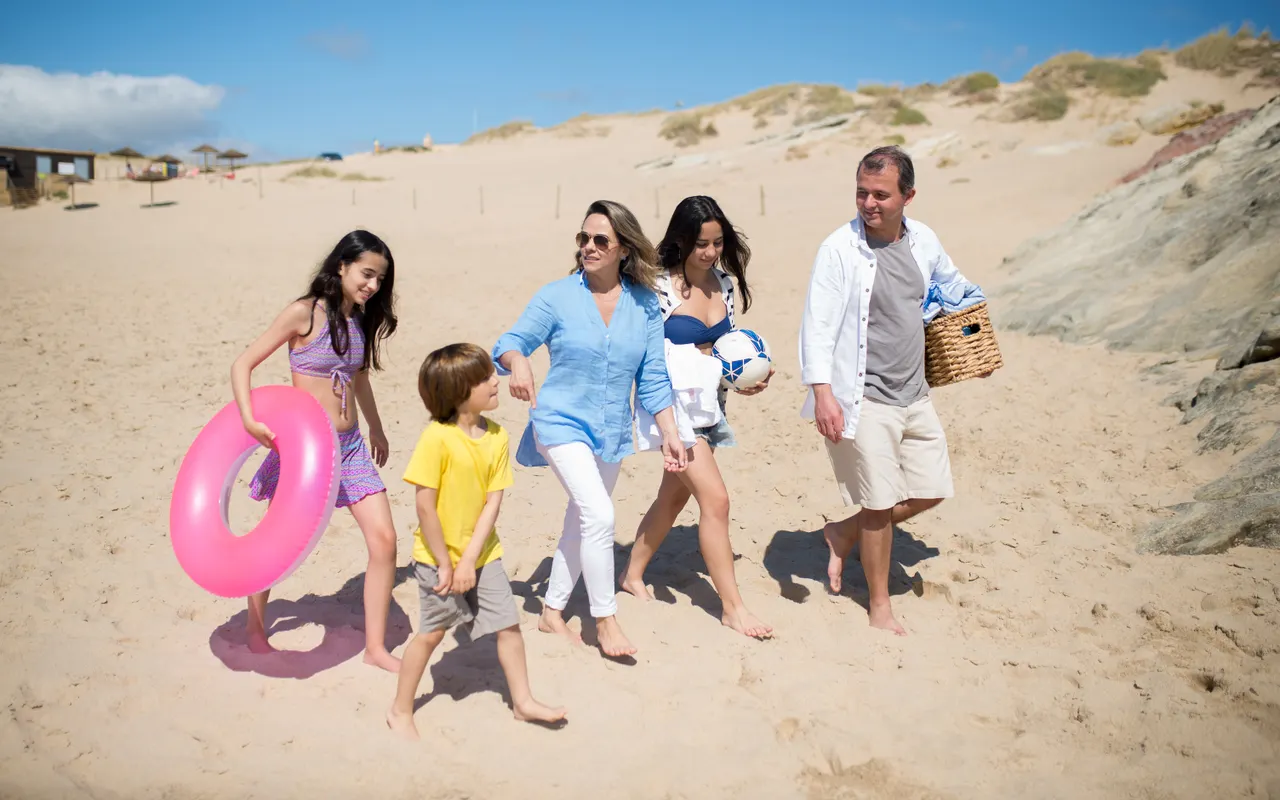
A family label can describe very different products. One tour welcomes children but expects them to follow an adult programme. Another has been deliberately arranged so parents and children can enjoy the day together. The difference becomes visible in the transfers, facilities, waiting and participation choices as much as in the main attraction.
Start by defining the household problem you intend to solve. Perhaps parents want a short cultural activity between beach days, or a manageable morning for children of different ages. A specific brief helps you build an experience that parents can assess before committing their holiday time.
Define the family you can serve well
Choose an initial age range and travel situation. A workshop designed for school-age children needs different instructions and equipment from a sightseeing route welcoming infants. Do not make a broad all-ages promise merely because no supplier has formally prohibited children.
Think about the accompanying adults too. Parents might want to join the activity, observe comfortably or share responsibilities between siblings. Grandparents or other relatives may have different access needs. Age alone does not tell you a person's mobility, interests or confidence, so collect functional requirements respectfully.
Write a primary audience statement: families with children in a defined range who want a particular experience, can manage the described movement and expect a stated duration. Then list cases requiring discussion before booking. That gives your sales team a clear basis for answering questions.
The NPS family visit resource offers family trip planning material. Use it as a reference point for considering the complete day, while testing your own activity, facilities and local arrangements rather than transferring assumptions from another destination.
Map the day from a parent's perspective
Follow the proposed experience with the tasks a parent performs. They find the meeting place, manage bags, organise children, locate toilets, explain unfamiliar instructions and decide when someone needs a break. A tour that removes uncertainty at these moments can feel valuable without adding expensive attractions.
Inspect loading and waiting areas, not only the workshop or destination. Check whether the route requires stairs, uneven surfaces or long periods without seating. Record measured or observed facts where possible. Stroller-friendly means little if the vehicle cannot carry a folded stroller or a key entrance has unavoidable steps.
Make a facility record with locations, opening arrangements and constraints. Verify it again when the venue changes. Do not publish a toilet icon based on a facility that is locked outside the host's normal working hours.
Separate what you provide from what families should bring. If storage is limited, say so before arrival. Explain where belongings can remain during an activity and who is responsible. These practical details can decide suitability more reliably than a collection of cheerful photographs.
Build meaningful participation at different levels
Choose activities with several ways to engage. In a craft session, one child may enjoy choosing patterns while another wants to learn how a tool works. An adult may appreciate the history or technique. They can share a subject without all completing an identical task.
Ask the host which parts can be adapted and which require fixed supervision or capability. Do not improvise an easier-looking activity without confirming that it is appropriate. Technical requirements, equipment fit and participation limits belong with competent providers and current activity rules.
Give children a role that contributes to the experience. They might observe a detail, choose between agreed materials or help compare two outcomes. Avoid inventing tasks simply to occupy them while the adults receive all the meaningful content.
NPS guidance on hiking with children includes involving them in planning. For your tour, offer a small, genuine choice within the agreed programme. Make clear that a child choosing a colour or story does not control the route, schedule or operating decisions.
Protect time for transitions
Time the full family arrival process in a pilot. A group may need longer to settle, visit facilities and understand the next step than your staff do on an internal inspection. Include those transitions in the advertised duration instead of quietly taking time from the main activity.
Keep the opening practical and brief. Introduce the host, explain where the group can go, identify the next break and describe how participation will work. Parents should not have to interrupt a long introduction to find essential information.
Avoid a dense sequence of high-attention tasks. Alternate instruction with doing, movement with a suitable pause and conversation with time to observe. The exact rhythm depends on the audience and activity; there is no universal number of minutes that every child can concentrate.
Look for a graceful way to decline an optional element. Where the venue and staffing permit it, identify a suitable place for an accompanying adult and child to pause. Confirm the arrangement before selling it, including whether rejoining is practical and how supervision works.
Make food arrangements explicit
Describe what food or drink is included, when it is served and the format. A tasting of several local items is a different promise from a full lunch. Photographs should not imply a buffet if each guest receives a small portion during a demonstration.
Ask providers what dietary requests they can assess and accommodate, then communicate that answer accurately. Do not guarantee an allergen-free environment from a casual message or assume removing a visible ingredient resolves a request. Give families a clear route to discuss requirements before booking with the responsible provider.
Decide whether guests may bring their own snacks and where they may consume them. Host venues may have restrictions, and an activity area may be unsuitable. Explain the workable arrangement rather than leaving parents to discover a rule when a child becomes hungry.
For school or educational groups, the NPS field-trip planning guidance is a useful logistics reference. It highlights planning the educational activity, travel and lunch together. Your commercial family tour still needs its own supplier checks and appropriate supervision arrangements.
A hypothetical family workshop revision
Imagine an operator developing a three-hour food and craft visit for families with children aged seven to twelve. The first hypothetical pilot begins with a lengthy explanation, then requires everybody to complete the same intricate craft before food is served.
Parents say the host was welcoming, but several guests struggled to follow the sequence. Observation shows that the main difficulty was simultaneous instruction and equipment distribution. The group also did not know when the food break would happen. Calling the children impatient would miss the product problem.
The operator revises the visit with a short demonstration, equipment prepared at each place and two approved levels of craft detail. The food timing becomes visible in the welcome briefing. The host retains the right to stop or adapt participation when the agreed requirements are not met.
The second pilot tests whether these changes reduce confusion and allow adults to participate too. These invented details illustrate a design process; they do not establish a successful real-world product. Different age groups and activities would need separate evidence before extending the audience promise.
Set prices around resources and traveler types
Decide which traveler categories the programme genuinely supports. Infants, children and adults may use different resources, but every person still affects occupancy, transport and planning. A free price does not mean a participant can disappear from the manifest.
Ask suppliers to explain their age rules and required resources. A venue's child ticket definition may differ from your workshop's suitability range. Keep the commercial rule and participation rule distinct so the team does not accidentally treat a lower price as proof that a child can join every element.
Calculate family examples before publication. Show the sales team how to handle two adults and two children, one adult and siblings, and an accompanying infant where supported. Confirm any minimum party charge and how optional elements affect the total.
Use the guide to manual bookings and guest manifests for the operational record. Your family product brief should make the required information clear without asking parents to submit unnecessary personal detail during a casual initial enquiry.
Give parents specific suitability information
Replace ideal for everyone with facts that help a household decide. State the intended age range, total duration, longest expected transfer, walking surfaces, seating arrangements and the type of participation. Explain known constraints close to the main description.
Access information should describe what is available and where discussion is needed. UN Tourism's accessibility guidelines address the connected journey through transport, information and tourism services. That broader view is useful when checking a family experience; it does not make a tour universally accessible.
Show the actual setting in photographs. A family image taken at a spacious private table can misrepresent a shared departure with limited seating. Obtain appropriate permission for identifiable participants and keep a usable alternative when someone does not want their child photographed.
Provide a short pre-booking question route. Parents should know who can answer whether a specific request is workable and when an answer will arrive. Record the agreed response so a different staff member does not casually reverse it later.
Brief guides and hosts as one team
Agree who welcomes guests, explains activity instructions, handles family requests and coordinates any pause. Clarify the responsibilities of accompanying adults and staff according to the product and applicable requirements. A friendly atmosphere should not leave supervision ambiguous.
Prepare respectful language for declining participation when the agreed requirements are not met. Explain the practical reason and the available next step. Avoid debating a child's ability in front of the group or making improvised exceptions because a family has already travelled to the venue.
Give guides an escalation contact and enough context to act consistently. They should know which adjustments are approved and which require provider confirmation. A backup craft material may be easy to substitute; changing the nature of a specialist activity is a different decision.
Practice ordinary disruptions during staff rehearsal: a late arrival, siblings wanting different options or a parent asking to leave early. Resolve handovers and communication before a live group arrives. Keep the response proportionate and avoid collecting sensitive information that is unnecessary for the decision.
Keep a product brief and improve from evidence
Write a family brief that fits on a page, with supporting details linked behind it. Include the intended household, participation requirements, facilities, duration, food format, traveler categories and the decisions staff can make. Name the person who owns updates.
Use this review checklist after pilot and early departures:
- Did the arrival instructions work without extra explanation?
- Were facilities available when the programme needed them?
- Could adults and children participate meaningfully?
- Which transition created unnecessary waiting?
- Did the actual day match the suitability description?
- Which request requires a product change or a clearer limit?
Read feedback by household situation rather than averaging every response. A product may work well for your intended age range while needing a different format for younger siblings. That can justify a separate version rather than expanding one listing until it becomes confusing.
When the brief is reliable, Tripnatic's operator registration journey is a relevant next step for preparing a clear family listing and managing availability. Verification and approval are required before activation. Accurate content, traveler types and pickup information help parents assess the offer; they cannot replace the operator's suitability checks or provider decisions.
Keep a short record of questions parents ask before booking. If several households need to ask where a stroller stays or whether adults join the workshop, move the answer into the product brief. This improves the decision before arrival and saves staff from repeatedly composing answers that may drift apart across different sales channels.
Use a structured tour pilot whenever you make a material change to age range or format. A well-designed family tour earns trust through a day that works in practice and a description that helps the right households choose it.


