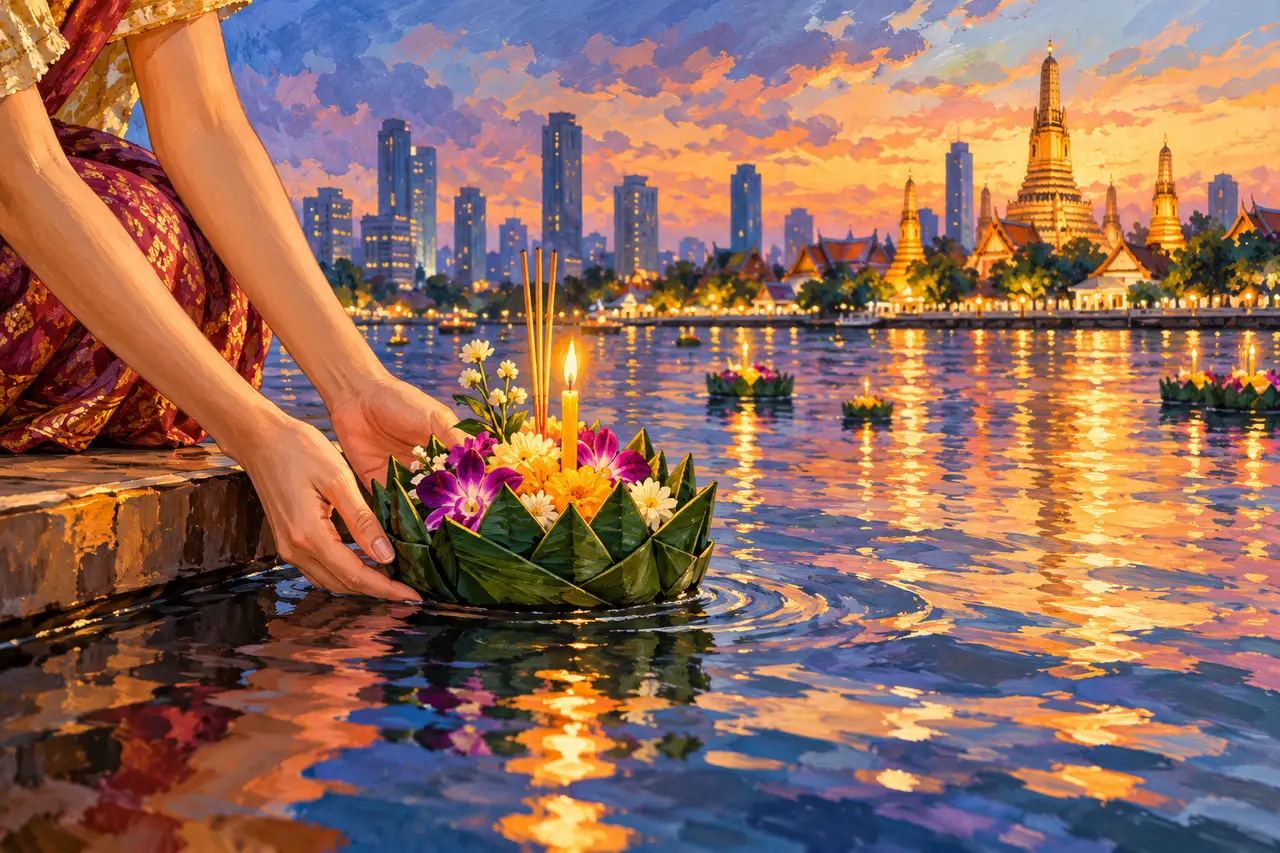
Editorial check: 16 October 2026. This guide uses November 24, 2026 as the Loy Krathong planning date. Local programmes and authorised water access need confirmation; older festival listings below are historical context. The itineraries are editorial suggestions, not organiser schedules. Any generated cover is an illustration, not documentation of a specific event.
Loy Krathong, also written Loi Krathong, is a water-focused festival whose date follows the Thai lunar calendar. In Bangkok, the atmosphere comes from riverside communities, temple activities and venue programmes. Do not confuse it with a guaranteed mass sky-lantern release. Before planning the evening, confirm that year's date and the locations authorised to receive floats. A river view does not automatically mean the bank is safe or open for public launching.
Pick a single river district
The Chao Phraya is the obvious place to start, but the choice of bank matters. ICONSIAM offers a managed commercial riverfront to monitor for current festival information. The old-city side around Tha Tien offers a different experience, with temples, narrow streets and restaurant viewpoints. Choose one main area and check its published access arrangements rather than trying to cross between multiple busy piers all evening.
Have dinner before the most crowded period. A restaurant table can be useful for a family, but ask whether your booking includes any festival activity or simply a meal. If a venue offers krathong making, confirm the materials and whether participants can launch them at a supervised collection point. A workshop can provide a meaningful activity without needing to stand at a crowded river edge.
A suggested old-city evening
Arrive around Sanam Chai with daylight remaining, visit a cultural stop if it is open, and walk toward Pak Khlong Talat. Flowers help explain the care that goes into a krathong, but buy only what you need and do not obstruct the market. Continue to your chosen dinner or authorised festival site. Leave enough time to understand the exit before the area fills.
If you prefer the west bank, centre the evening on ICONSIAM and its confirmed programme instead. Avoid assuming that a normal public boat will operate late enough for your return. Festivals can bring special services, queues or temporary pier restrictions. Ask the boat operator directly and identify a land route as a fallback. A taxi may need to collect you away from the waterfront entrance.
Participate without leaving unnecessary waste
Ask local organisers what kind of float they accept and how cleanup is handled. Share one small krathong as a family if floating is permitted. Avoid foam, plastic accessories and metal staples where alternatives exist. A float marketed as natural still becomes material that somebody has to remove from the water. Watching, making a wish privately or joining a workshop without launching anything are valid ways to take part.
Do not descend an unlit bank, lean across a barrier or allow children to reach into the current. Stay away from boat manoeuvring areas and follow staff instructions even if other people ignore them. Keep candles and incense away from clothing and crowded queues. Ask before photographing worshippers closely. The festival is more rewarding when the ritual receives as much attention as the photograph.
What to book and what to leave flexible
Reserve a specific dinner or cruise only after checking the festival date and boarding details. Ask cruises about the return pier and whether shore activities are actually included. For a lower-cost evening, use rail to reach your selected district, eat locally and observe the public celebrations with a flexible finish time. Young children and visitors with limited mobility may prefer an early view from a seated venue. Leave when your group is comfortable, rather than waiting for a supposed single grand finale that the organiser has never announced.
An early cultural visit and one waterfront area
Use the morning for an old-city visit, rest after lunch and return to only the authorised evening location announced for your area. A restaurant on the Chao Phraya does not necessarily run a public floating activity, and a cruise is a separate booking with its own boarding deadline. Ask about access from the pier to the actual venue. Families may prefer a workshop or a managed contained-water activity where participation and exit are clear. If the chosen public event is too crowded, keep the meal and observe from a safe permitted area. Moving to another busy riverbank late in the evening seldom improves the experience.
Choose a base that supports the whole visit
For a first visit, sketch your evenings on a map before choosing a hotel. Siam and Chit Lom put the shopping and lighting district within a coherent rail-based stay. The old city suits temple and museum mornings, although an address described as riverside still needs its own transport check. Chinatown suits food and neighbourhood walks, but a hotel near a busy restaurant street can mean noise and a slower car pickup. A cheaper room far from the places you intend to visit can cost more once late transfers and lost time are included.
Separate the old-city cluster from the modern shopping cluster. Wat Pho, Museum Siam and the flower-market area can form one day; Siam and Ratchaprasong make another. Talat Noi and Yaowarat fit a slower neighbourhood day. These are suggested geographical groupings, not a claim that every stop opens on your chosen holiday. Resist the temptation to add a famous attraction across town simply because a map shows a short straight line. The useful measure is door-to-door effort, including queues, walking, the heat and the journey home.
For an accessible outing, ask about the specific entrance and lift rather than asking only whether a venue is accessible. An elevated walkway, a station entrance and a restaurant threshold can each be a separate obstacle. A short taxi journey may make a cultural morning possible, while rail can be easier for an evening near central shopping areas. Keep a small meal option near the hotel for anyone who finishes early. Agree whether a group needs to stay together all day or can split after lunch.
Build the food day around the route
Choose one meal as the anchor and let snacks fill the gaps. A Chinatown evening can include a noodle dish, something grilled and dessert, but there is no need to queue for several different famous stalls. Order portions in stages and check where you can actually sit. Around the river, a table with a view is a different purchase from a street-food crawl. Ask what your reservation buys before adding the premium. Vegetarian travellers should ask about stock and sauces even when a dish contains no visible meat; those with allergies should keep a written explanation available. A mall food court or straightforward hotel meal is a useful backup when heat, crowds or dietary needs make street eating difficult.
Participate through a managed local activity
Use November 24, 2026 as the festival-night planning anchor, then confirm the exact local programme. Some organisers run activities on nearby dates, and an older November listing may belong to a different lunar year. A hotel workshop, a municipal waterfront gathering and a cultural attraction's evening all have different booking and access arrangements. Ask which parts are open to visitors and whether any ordinary admission charge also covers the festival activity.
A small craft session can help explain the tradition before the evening gathering. Choose one modest krathong for the group if the organiser permits floating, and ask how material will be collected afterwards. Natural material still becomes waste in a waterway, so biodegradable is not permission to launch it anywhere. Watching, making a wish or participating in a workshop without releasing anything can be a meaningful choice. Do not add sky lanterns to the plan unless a relevant authority explicitly runs a lawful activity; Loy Krathong photographs are not evidence of permission.
Arrive while there is still light to identify steps, edges, toilets and the route back. Keep children away from open candles and crowded water access. If the surface is slippery or the water is rough, let the stewards direct movement rather than searching for your own launching place. Eat before the main gathering or book a table close to it. An unhurried meal and a short respectful visit can offer more understanding than several hours trying to reach the busiest photograph spot.
The final route and booking check
For the final booking check, name the station or pier as well as the venue. A BTS stop, MRT stop and river-boat pier are different starting points, even when they serve the same broad neighbourhood. Ask a restaurant which entrance remains usable during crowd management and choose a legal pickup a little away from the busiest doorway. Save the accommodation’s Thai address and keep a small return-transport reserve separate from the meal budget.
For the old city, MRT Sanam Chai supports the Museum Siam and Wat Pho area; MRT Wat Mangkon serves a different Chinatown outing. Siam and Chit Lom suit the central shopping district. Check each operator’s current service notice for holiday changes rather than assuming a special late train.
Sources and checking the next celebration
Updated and checked on 16 October 2026. The routes above are our suggested itineraries. Historical festival listings establish what happened in that edition, not a confirmed future programme. Recheck the organiser's dated announcement, access rules and booking terms before paying for a holiday event.
- TAT: Loy Krathong 2025, historical regional context
- ICONSIAM: event announcements
- Tourism Authority of Thailand: Bangkok
- Museum Siam: visitor information
Compare Bangkok tours and activities when an organised transfer or guide would make the day easier. Check the actual date, meeting point, inclusions and cancellation deadline on each experience.
Thai government: dated 2026 Loy Krathong calendar reference. This source describes Sukhothai, not a programme in this destination.
Use the Bangkok destination guide to compare nearby stops before adding another transfer.
Cover: an original editorial illustration of the holiday atmosphere, not a photograph or confirmation of a particular venue or event.