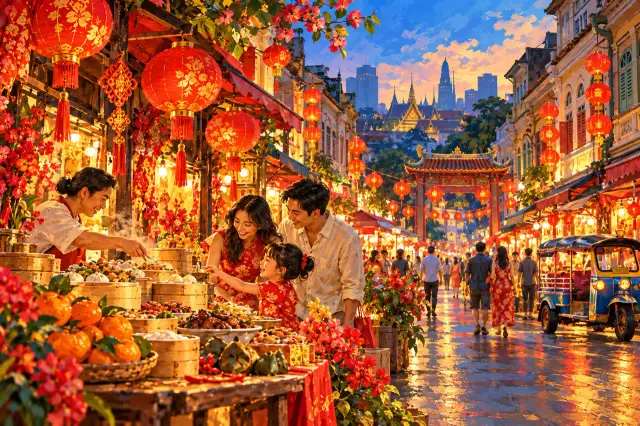
Editorial check: 16 October 2026. This guide plans Songkran 2027, using April 13 to 15 as the national festival anchor. Local extensions, road closures, water-play zones and performances require a dated 2027 notice. The itineraries are editorial suggestions, not organiser schedules. Any generated cover is an illustration, not documentation of a specific event.
Songkran is Thailand's traditional New Year, with the core holiday on April 13 to 15. In Bangkok, the experience changes sharply by district: a temple blessing, a managed riverside splash zone and a crowded street celebration are not interchangeable. Decide how wet and busy you want the day to be before leaving your hotel. Carry a complete dry change of clothes if you plan to move from water play to dinner.
Start with the traditional side
A morning around Wat Pho gives the day cultural context. Wear temple-appropriate clothing and ask staff where any public Buddha-bathing or merit-making activity is taking place. Do not assume every ritual is open to visitor participation or that a temple courtyard is part of a street water fight. Keep your water equipment packed away inside religious compounds.
The area around Sanam Chai also lets you plan a sheltered break, provided the museum or café you choose confirms its holiday opening. Have lunch before joining a major splash area. An actual seated meal, water to drink and time to cool down are more useful than trying to live on festival snacks for a full hot afternoon.
Pick one water-play district
Silom and Khao San are well-known names to investigate when current city announcements confirm the arrangements. They attract visitors with different plans and crowd tolerances. Walk the route in daylight if you are unfamiliar with it, identify an exit and agree where your group will meet if mobile reception becomes unreliable. Road closures can mean your taxi's destination is the edge of the district rather than the door.
For another format, ICONSIAM held a managed Songkran programme in April 2026, including a designated River Park splash area. That is a documented previous edition, not a confirmed programme for a later year. Check its next announcement for age rules, dates, clothing requirements and permitted equipment. A controlled venue can be easier to understand than a long street, although it can still become crowded.
A realistic day for families
Do the temple or cultural visit first, return to the hotel for lunch or a rest, and make water play a short afternoon activity. Young children do better with a clear finish time and access to toilets. If they dislike noise or getting splashed unexpectedly, ask your hotel about a supervised activity and choose a different day for a busy public district. A waterproof pouch is useful, but test it with tissue before putting your phone inside.
Wear shoes that grip when wet and clothes that remain comfortable and opaque. Keep essential medication protected and carry small cash separately. Do not splash motorcyclists, drivers, monks, babies or anyone clearly avoiding the activity. Avoid high-pressure devices, dirty water and throwing water into faces. The holiday should not put someone else's journey or work at risk.
Plan the dry half of the trip
Leave passports and unnecessary electronics securely at your accommodation, keeping any identification you need protected. Book intercity travel early because Songkran also means family journeys across Thailand. If a dry sightseeing day matters, move outside the busiest zones rather than expecting a backpack or camera to signal that you want to stay dry. Finish with dinner near your base, wash off, and allow the next day to be flexible. A half day of water play plus a cultural morning usually provides a better first Songkran than an exhausting all-day circuit.
Two days with different levels of water play
Choose a cultural morning around Sanam Chai and Wat Pho on one day, with dry clothing and a normal lunch. Use a second day for your selected managed splash area after checking the 2027 announcement. If you choose Silom or Khao San, locate the edge where you will leave and agree a meeting point before entering the crowd. A group with mixed interests can split after lunch, with some joining water play and others returning to the hotel. Do not book a formal riverside dinner immediately after the splash session; leave enough time to travel, shower and change without turning a cheerful afternoon into a deadline.
Choose a base that supports the whole visit
For a first visit, sketch your evenings on a map before choosing a hotel. Siam and Chit Lom put the shopping and lighting district within a coherent rail-based stay. The old city suits temple and museum mornings, although an address described as riverside still needs its own transport check. Chinatown suits food and neighbourhood walks, but a hotel near a busy restaurant street can mean noise and a slower car pickup. A cheaper room far from the places you intend to visit can cost more once late transfers and lost time are included.
Separate the old-city cluster from the modern shopping cluster. Wat Pho, Museum Siam and the flower-market area can form one day; Siam and Ratchaprasong make another. Talat Noi and Yaowarat fit a slower neighbourhood day. These are suggested geographical groupings, not a claim that every stop opens on your chosen holiday. Resist the temptation to add a famous attraction across town simply because a map shows a short straight line. The useful measure is door-to-door effort, including queues, walking, the heat and the journey home.
For an accessible outing, ask about the specific entrance and lift rather than asking only whether a venue is accessible. An elevated walkway, a station entrance and a restaurant threshold can each be a separate obstacle. A short taxi journey may make a cultural morning possible, while rail can be easier for an evening near central shopping areas. Keep a small meal option near the hotel for anyone who finishes early. Agree whether a group needs to stay together all day or can split after lunch.
Build the food day around the route
Choose one meal as the anchor and let snacks fill the gaps. A Chinatown evening can include a noodle dish, something grilled and dessert, but there is no need to queue for several different famous stalls. Order portions in stages and check where you can actually sit. Around the river, a table with a view is a different purchase from a street-food crawl. Ask what your reservation buys before adding the premium. Vegetarian travellers should ask about stock and sauces even when a dish contains no visible meat; those with allergies should keep a written explanation available. A mall food court or straightforward hotel meal is a useful backup when heat, crowds or dietary needs make street eating difficult.
Plan a wet activity and a dry part of the day
Songkran is more enjoyable when water play has a beginning and an end. Choose where to join, agree how long to stay and know where the dry clothes are waiting. A temple visit first can give cultural context, followed by lunch and a rest before the splash activity. This sequence avoids arriving at a religious site in soaked party clothing and gives children a chance to decide whether they still want to take part.
Keep the equipment simple. Test a waterproof pouch with a tissue before trusting it with a phone, protect essential medication separately and leave documents you do not need at the accommodation. Footwear should stay secure on wet paving. Ask the organiser about drinking water, toilets, shade and a family exit. A nominally family-friendly location can still be loud and crowded. Plan an easy way for one adult to leave with a child who is overwhelmed while the rest of the group continues.
Choose clean water and gentle play, follow venue rules and leave non-participants space. Traffic is not part of the game: do not throw water at riders or vehicles. A quiet meal after changing and showering is often a better finish than another crowded district. Travellers who need a dry day should ask the accommodation about their entrance and pickup arrangements, then keep outings short. No guide can guarantee that every ordinary street will be dry, so avoid a plan that makes a formal appointment depend on that assumption.
The final route and booking check
For the final booking check, name the station or pier as well as the venue. A BTS stop, MRT stop and river-boat pier are different starting points, even when they serve the same broad neighbourhood. Ask a restaurant which entrance remains usable during crowd management and choose a legal pickup a little away from the busiest doorway. Save the accommodation’s Thai address and keep a small return-transport reserve separate from the meal budget.
For the old city, MRT Sanam Chai supports the Museum Siam and Wat Pho area; MRT Wat Mangkon serves a different Chinatown outing. Siam and Chit Lom suit the central shopping district. Check each operator’s current service notice for holiday changes rather than assuming a special late train.
Sources and checking the next celebration
Updated and checked on 16 October 2026. The routes above are our suggested itineraries. Historical festival listings establish what happened in that edition, not a confirmed future programme. Recheck the organiser's dated announcement, access rules and booking terms before paying for a holiday event.
- ICONSIAM: Songkran 2026, historical programme
- TAT Newsroom: Songkran's cultural and regional celebrations
- Tourism Authority of Thailand: Bangkok
- Museum Siam: visitor information
Compare Bangkok tours and activities when an organised transfer or guide would make the day easier. Check the actual date, meeting point, inclusions and cancellation deadline on each experience.
Use the Bangkok destination guide to compare nearby stops before adding another transfer.
Cover: an original editorial illustration of the holiday atmosphere, not a photograph or confirmation of a particular venue or event.