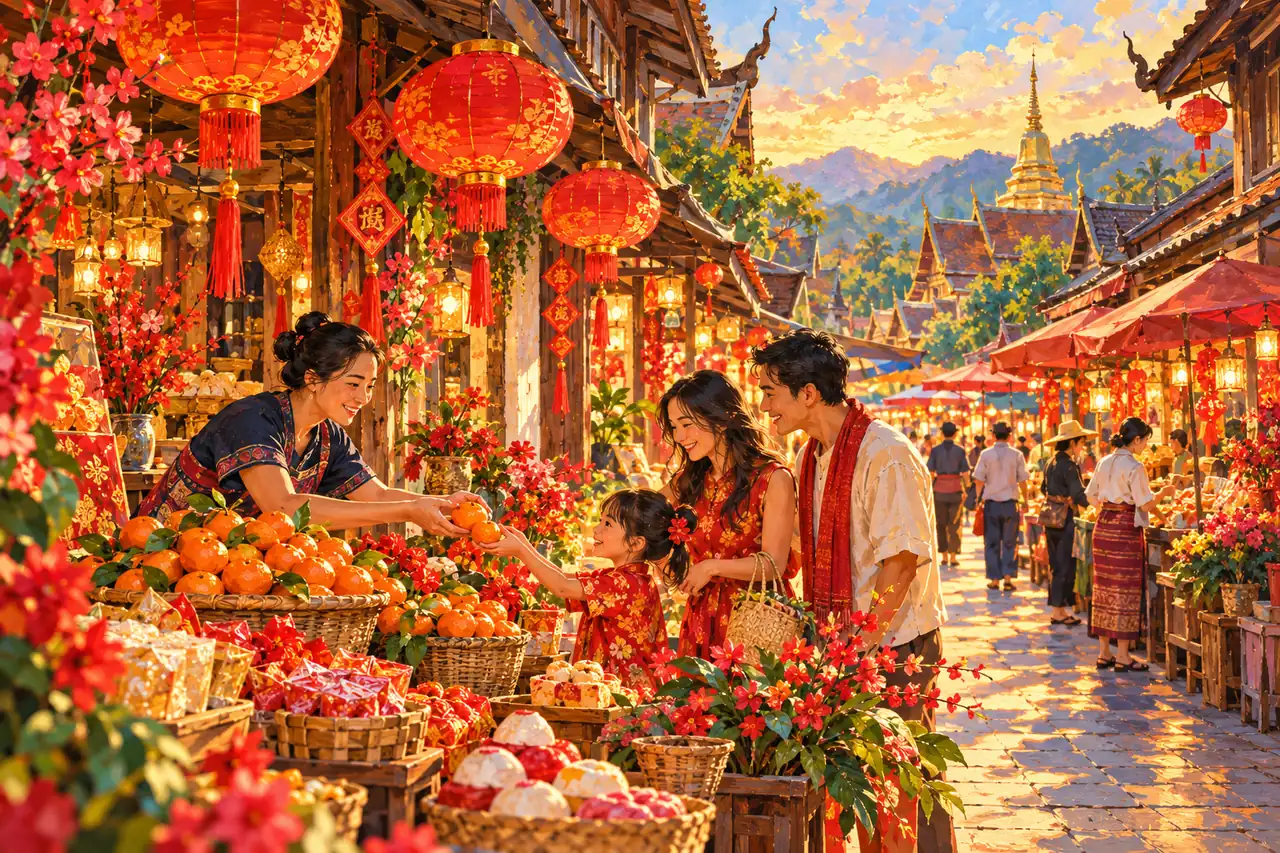
Chiang Mai's Chinese New Year is most rewarding around the working market neighborhood east of the Old City. Warorot, Ton Lam Yai and the Chang Moi streets give you a meaningful place to explore even before a stage program is announced. The point is not just red decorations: this is an opportunity to notice the businesses, ingredients, family rituals and food traditions of the city's Thai-Chinese community.
What past events tell you, and what they do not
Chiang Mai Municipality documented its Chinatown festival in 2025, and the Ministry of Culture's calendar published a Chiang Mai Chinatown event for 2026. Those sources establish a real local celebration around the market area. They do not confirm the future parade route, performance times, street closures or the number of festival days for another year.
Chinese New Year follows a lunar calendar, so do not assume the same Gregorian date annually. Before booking a short trip solely for a performance, check a dated municipal or Ministry of Culture notice. Keep one flexible evening so a confirmed program can be added without displacing a prepaid excursion.
A market route with a clear starting point
Begin at Warorot Market. Go in daylight first so you can understand the area while shops are easier to browse. Look at dried ingredients, teas, snacks and preserved foods, then buy only small quantities of unfamiliar items. Ask vendors how something is eaten rather than assuming every wrapped item is a sweet.
Continue toward Ton Lam Yai Market and the flower stalls. Families preparing offerings are shopping for a purpose, so keep access clear and avoid photographing them at close range without asking. You can enjoy the color and activity from the edges without obstructing business.
Walk a section of Chang Moi Road, using the route back toward Tha Phae as an orientation rather than attempting every lane. Keep checking traffic; the area remains a working neighborhood even when parts are decorated for the festival. Return later only if the current event plan confirms something you want to see.
Eat with a little curiosity
Look for freshly prepared noodles, steamed buns, dumplings or roast-meat rice where a vendor is actually operating. These are things to investigate, not a promise that every festival stall sells the same menu. Ask whether a bun is filled with pork, beans or custard before buying several for the group.
Notice the difference between ready-to-eat snacks and foods being bought for a family offering. Do not touch ritual displays or assume a table outside a shop is a public tasting. For a seated meal, HONG's Chinese Restaurant at InterContinental Chiang Mai The Mae Ping provides a direct menu and reservation channel. Ask whether a special holiday menu replaces its ordinary offering.
How to watch a performance comfortably
If a dragon or lion performance is announced, arrive before the crowd becomes dense and choose an edge with an exit route. Do not follow performers into shop entrances or stand between them and the business hosting a blessing. Drums and firecrackers can be loud, so a short viewing period works better for young children than waiting against a barrier for hours.
Wear comfortable shoes and bring enough water for the walk. Carry cash in manageable denominations, keep bags small and agree a meeting point outside the busiest intersection. Shops may alter their hours for family celebrations, so do not leave a necessary purchase until the last evening.
A two-day trip that remains useful without a parade
Make day one the Chinatown market and food day. On day two, choose an Old City temple walk, a cooking class or Nimman shopping, keeping that outing separate from religious ceremonies. Chinese New Year is not a reason to treat every Buddhist temple as a festival venue; follow each site's own program and etiquette.
February or late-January travel can coincide with busy winter dates, and air quality is variable. Keep an indoor dining or craft alternative and check current monitoring before booking an exposed mountain activity. The market district offers plenty of value even if you choose not to join the largest crowd.
Choose the base and arrival that fit your route
The Old City suits a first visit built around temples, gate-side food and walking. Chang Khlan places you near the Night Bazaar and larger hotels; Nimman suits coffee, design shopping and a contemporary evening. They are separate neighborhoods. Choose dinner near your final activity instead of crossing the city repeatedly, especially when festival closures affect the moat roads.
Three ways to extend the visit without wasting a transfer
Give the Old City a morning of its own. Start near Wat Phra Singh, continue toward Wat Chedi Luang and choose lunch before crossing the moat. This makes sense for travelers who enjoy looking closely at architecture, browsing small shops and taking a cafe break. It also lets you return to an Old City hotel easily. A temple is a living place of worship, so a closed hall is a reason to adjust the visit rather than push past an entrance barrier. Keep a covered-shoulder layer with you even when the rest of the day is informal.
Make the river-and-market district a second, different outing. Warorot and Ton Lam Yai are working markets, useful for ingredients, flowers and the ordinary rhythms of the city. Walk only a short section if heat or crowds become tiring. Buy a small portion of unfamiliar food first, then ask how it is served before ordering more. Leave enough room in your bag for purchases and check which foods your onward destination permits. An ornamental package does not make meat or plant products eligible for international import.
The third version is a Mae Rim excursion. Treat the outward drive, the attraction and the return as the main activity of the day. A lunch or garden setting can justify the trip, but it does not belong between two tightly timed city reservations. Ask the driver whether waiting, parking and the return are included in the quote. If a special resort meal is the reason you are going, reserve it directly before arranging transport. The hotel postcode matters more than the marketing phrase 'Chiang Mai,' which can cover properties well outside the walkable center.
A local food day with clear ordering choices
For breakfast or lunch, try one bowl of khao soi before turning the meal into a tasting challenge. Ask whether the broth and toppings contain chicken, beef or another meat. The crunchy noodles, soft noodles, lime, shallot and pickled accompaniments play different roles; add the garnishes gradually so you can taste the curry first. A restaurant can adapt the spice level, but a dish prepared from a shared curry base may not be adaptable to every allergy.
At a market, choose a few freshly cooked dishes with sticky rice rather than carrying a large assortment through a hot afternoon. Sai ua is a useful northern specialty to recognize, but vegetarians should request a fully separate alternative and ask about stock and sauces. For a celebratory restaurant meal, a written dietary request made when booking is more useful than expecting staff to redesign a set menu at the table. Keep a simple meal near the hotel as the fallback if a long outing runs late.
For an indoor activity, compare a cooking session with a craft workshop. Ask what you actually make, how many guests share a station and whether the pickup area covers your accommodation. A market tour is not included in every cooking class, and a finished craft may need time to dry before a flight. These details make the difference between a practical holiday activity and an attractive description that does not fit your schedule.
Put February 6, 2027 on the calendar, then check the community dates
Chinese New Year's Day in 2027 is February 6, as listed by the Hong Kong government's calendar. That source establishes the lunar-calendar date; it does not declare a Thai public holiday or a local performance schedule. Preparations, family meals and community events can fall on adjacent days. Wait for the local organizer's dated notice before booking a trip solely to see a particular lion dance, parade or stage show.
Treat a shrine visit as religious observation rather than an attraction performance. Follow the direction of worshippers, leave offering tables alone and ask before photographing anyone closely. Drums, gongs and any permitted firecrackers can be loud, so view from an edge with children or anyone sensitive to noise. A quieter period can reveal more about the neighborhood's ordinary life than the most crowded part of a programme.
Make food and shopping a patient exploration
Try small portions of freshly prepared noodles, buns or other food that is actually being sold. Ask about fillings and ingredients before buying for a whole group. Some wrapped foods and displays are being prepared for offerings or family meals rather than immediate street eating. Do not assume every decorated table is a public tasting. Shops may change their hours while families observe the holiday, so avoid leaving an essential purchase until the last minute.
Use the market or village visit as one part of the day and book a seated meal nearby if you need a predictable rest. Tea is a useful purchase when you have tasted the style and learned how to brew it. Ask permission before entering workshops or photographing private interiors. The aim is to spend time and money respectfully in a real neighborhood, with the announced celebration added when it is confirmed.
The route decision for this particular holiday
Warorot, Ton Lam Yai and Chang Moi give the day a coherent market focus. A meal at HONG's is an optional different setting reached by a short planned transfer, rather than part of a presumed Chinatown parade route.
Compare the Chiang Mai destination overview when choosing your base.
Sources and checking the next celebration
Editorial check: 16 October 2026. The routes above are editorial suggestions. An earlier year's festival listing establishes what happened then, not the dates, lineup, prices or permissions of a future edition. Recheck organizer notices before paying for travel.
- Ministry of Culture: Chiang Mai Chinatown 2026 event record.
- Government Public Relations Department: historical Chiang Mai Chinatown festival.
- TAT: Warorot Market.
- InterContinental's HONG's dining information.
Browse Chiang Mai tours and activities for available experiences, and compare the actual pickup area, duration and cancellation policy before booking.
Cover: an original editorial illustration of the holiday atmosphere, not a photograph or confirmation of a particular venue or event.