Songkran in Chiang Rai is a chance to experience northern New Year customs without treating the whole province as a water-fight course. Build a respectful morning around temples, then choose whether to join an announced town celebration or spend the afternoon somewhere quieter. The most successful plan gives you control over where you get wet and how you get home.
Confirm the local program, not just the national dates
The core Songkran dates are April 13 to 15. Northern events can use additional days or different venue arrangements. TAT's 2026 nationwide announcements included Chiang Rai among the northern celebrations, while the government's Pi Mai Muang material highlights temple visits across the province. Neither is a future year's street-by-street timetable.
Before arrival, ask your accommodation for the current municipal program and road closures. Verify the exact venue of any concert or splash zone rather than assuming everything happens at the Clock Tower. A social post without a year is not a useful basis for a nonrefundable booking.
A temple morning in the city
Start at Wat Phra Kaew. Its central location makes it a sensible first stop without a long drive. Wear normal temple clothing, keep water toys away from worship spaces and follow the instructions for any Buddha-image bathing or blessing ceremony.
If your group wants another temple, choose Wat Rong Suea Ten with a booked transfer. It is a different site and should be visited at its own pace. Do not mistake a colorful exterior for an invitation to stage a water fight or costume photograph inside religious grounds.
Have a proper lunch before an afternoon celebration. A bowl of khao soi or nam ngiao offers a break from standing in the sun. Tell the kitchen about pork or vegetarian requirements; northern noodle dishes have different broths and ingredients, and their names do not fully describe them.
A short town celebration rather than an all-day circuit
Use the Clock Tower neighborhood as a navigation landmark and go only to the current designated celebration areas. Set a limit on how far you will walk and agree an exit point away from moving traffic. Keep one sealed dry bag for your phone, hotel address and essential money.
Use clean water, keep pressure gentle and do not aim at faces, motorcyclists, older people who are not taking part or anyone asking to be left dry. If a road becomes too dense, leave early rather than waiting for your whole group to become uncomfortable. A short cheerful session can be enough.
Plan your return to the hotel before a reserved restaurant meal. Confirm that your taxi or driver will accept wet passengers and choose a pickup outside the active splashing. Riding a scooter through unexpected water jets and holiday traffic is a poor way to solve the last transfer.
A quieter Songkran alternative
If you want culture without a water fight, visit one city temple early, have lunch and return to an indoor activity or your hotel. A countryside outing can also work, but April is not automatically clear and cool at altitude. Choose it because the place interests you, not because you expect the mountains to avoid all heat and smoke.
For Doi Tung, check current access, opening and the journey with the project or a reliable local operator. The garden and Hall of Inspiration are separate choices. A shorter visit may suit families better than trying to add Mae Salong and the border area in the same day.
What April changes
Heat and air quality can shape the day more than the event itself. Check the Pollution Control Department's current monitoring, schedule exposed walking early and keep a shaded or indoor backup. Do not rely on a dry-season photograph as evidence of present visibility.
Book accommodation and intercity transport early, since Songkran is a domestic travel period. Leave your arrival day free of fixed ceremonies, keep passports dry and put your hotel's Thai address on a saved screen. These small decisions make a holiday with unpredictable roads much easier to enjoy.
Choose the base and arrival that fit your route
Stay centrally if your evenings depend on walking to food. A riverside or rural hotel can be restful, but arrange transport both ways rather than assuming an app car will be waiting late at night. Airport and intercity journeys should be booked around the holiday itself. If you want Chiang Mai as well, allow an actual transfer day and avoid combining it with a fixed evening reservation.
Build a second day around one compass direction
A city morning can connect Wat Phra Kaew, a cafe and the Clock Tower neighborhood without involving a provincial sightseeing circuit. Use the hotel as your midday break, particularly if the main celebration is that evening. Tell a driver the full temple name because Chiang Rai has several frequently photographed religious and art sites. White, blue and black nicknames are convenient shorthand in conversation, but they do not describe the same kind of institution or the same visitor rules.
For a southwest outing, compare Wat Rong Khun with Singha Park and decide how much walking you want. These can inform a driver-led day, but visiting both is a suggestion rather than a guaranteed packaged route. Confirm the current entrance arrangements, the particular park activity and the restaurant before leaving. A grounds ticket, an organized activity and a festival ticket are different purchases. Keep a substantial lunch break and return early enough that the evening does not depend on perfect traffic.
For a northern mountain outing, Doi Tung is a complete choice. Its own tourism information distinguishes the Royal Villa, Mae Fah Luang Garden, arboretum and Hall of Inspiration. The garden is not the whole project. Pick the areas that match your interests and walking ability, then confirm the current ticketing and access. The Hall of Inspiration gives a different kind of visit from a flower photograph. Bring a layer and discuss the mountain road with your group before committing a full day to it.
Mae Salong is another deliberate choice, particularly for tea and Yunnan-influenced food. An overnight is often more relaxed than fitting it after Doi Tung and before a city dinner. Ask your host about the actual road approach, parking and meal times. A viewpoint with a cafe is useful even when mist or poor visibility removes the distant panorama. Decide whether tea, food or the landscape is your priority so you can enjoy the visit without collecting stops merely because they appeared on a map.
Food and transport questions worth settling in advance
Order nam ngiao only after checking its ingredients if pork, blood or meat stock would be a problem. For a mixed group, a seated restaurant with several cooked-to-order options is more practical than assuming a night-market stall can accommodate every requirement. Share small dishes and leave space for a second stop rather than ordering the entire evening's food at once. Tea purchases in the mountains are easier when you have tasted the style and asked how to brew it with the equipment you own.
When hiring a car, give the operator the actual list of stops and the required return time. Ask whether the price is per vehicle or per person and whether waiting, parking and any child seat are included. Do not compare a shared sightseeing pickup with a private driver as if they were identical services. Families and travelers who need frequent breaks should explain that before agreeing the route. A shorter city outing is a legitimate alternative when the roads or the group's energy make a mountain day unsuitable.
Plan the next edition around April 13 to 15, 2027
April 13 to 15 are the core annual Songkran dates. Local processions, temple ceremonies and organized water zones need their own dated 2027 announcement. The Thai government's 2026 event directory is a useful historical comparison, with different dates and venues for different provinces, rather than a schedule to copy into a future booking. Verify any ceremony that matters before arranging a guide around its supposed start time.
Pack for two distinct parts of the day. The temple visit needs respectful clothing and quiet behavior. Informal water play needs washable clothing, secure footwear and a sealed place for the phone, money and hotel details. Keep the passport at your accommodation when you do not need to carry it. Ask your host whether the route back passes active splashing, because a restaurant or hotel outside the main celebration area is not automatically reached by a dry route.
Make a dry alternative before you need it
An indoor cooking activity or craft session can be the main event for anyone who does not want to join water play. Confirm provider opening, pickup and holiday staffing directly. Book a meal after time to change, not immediately after a splash session. If someone in the group wants to stop, agree to leave together or use the meeting point chosen beforehand.
Check present heat and air-quality conditions before a long exposed outing. The Pollution Control Department's monitor gives current information; a photograph of clear mountains is not a condition report. A shorter walk followed by a shaded meal is often the more enjoyable April plan.
The route decision for this particular holiday
Wat Phra Kaew works as a quiet city morning. Doi Tung offers a separate countryside day, but its altitude is not a guarantee of clear air or a dry route through holiday traffic.
Compare the Chiang Rai destination overview when choosing your base.
Sources and checking the next celebration
Editorial check: 16 October 2026. The routes above are editorial suggestions. An earlier year's festival listing establishes what happened then, not the dates, lineup, prices or permissions of a future edition. Recheck organizer notices before paying for travel.
- TAT's nationwide Songkran 2026 announcement.
- Thai government: Pi Mai Muang temple visits in Chiang Rai.
- TAT: Wat Phra Kaeo.
- Pollution Control Department's current monitoring.
Browse Chiang Rai tours and activities for available experiences, and compare the actual pickup area, duration and cancellation policy before booking.
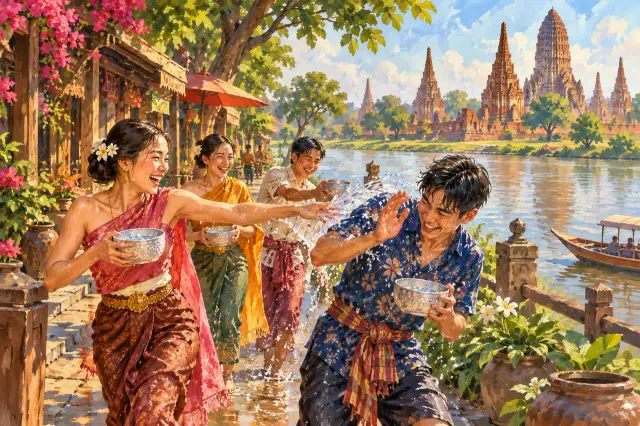
Cover: an original editorial illustration of the holiday atmosphere, not a photograph or confirmation of a particular venue or event.