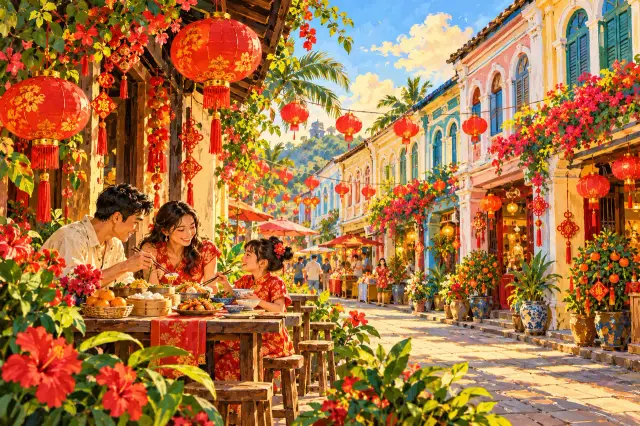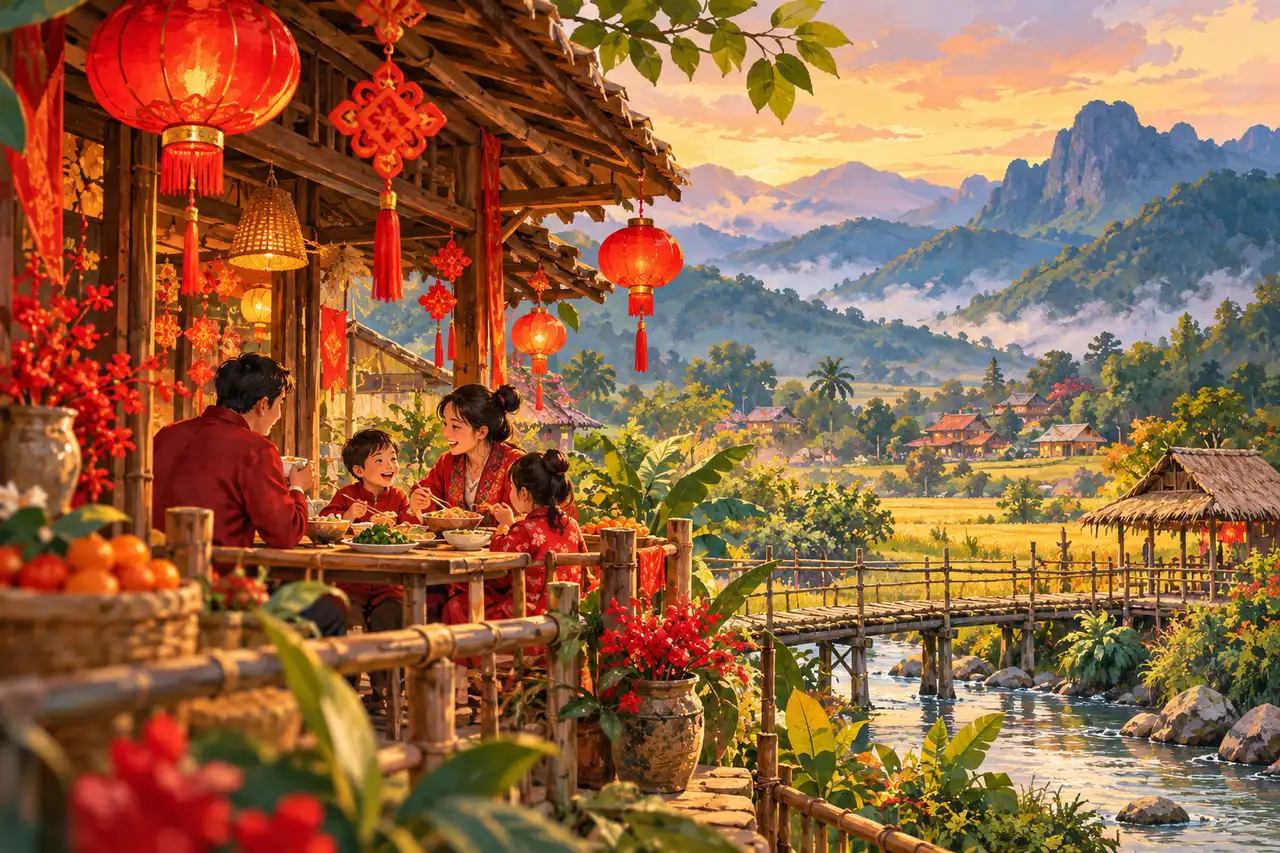
Chinese New Year in Pai is best approached through Santichon, the area's Yunnanese Chinese cultural village, rather than by assuming a large town parade. A visit can offer tea, food and insight into one part of the valley's cultural mix. The value comes from taking time with real businesses and hosts, not from treating a community as a seasonal photo backdrop.
Santichon is the meaningful starting point
Santichon Village is identified by TAT as a Yunnan cultural village. That establishes a genuine place to learn about Chinese heritage near Pai. It does not confirm a public New Year performance, a dragon parade or open access to family ceremonies for any particular year.
Ask your accommodation or village businesses what is happening on your travel dates and whether visitors are welcome. Chinese New Year follows the lunar calendar, and family-run kitchens or shops may change hours. A festival can be an important private family occasion even when there is little scheduled entertainment for visitors.
A food-and-tea visit worth spending time on
Arrive with room for lunch rather than treating the village as a brief stop between viewpoints. Ask a tea seller what styles are available, how they are brewed and what the difference is between a daily drinking tea and a gift purchase. Taste a small selection before buying, and check origin and packaging instead of assuming every product is grown beside the village.
For a meal, ask about Yunnan-style pork leg, steamed buns, noodles or the kitchen's current specialties. Order a manageable selection to share, and tell staff early if anyone avoids pork or needs vegetarian food. A family celebration can affect stock and service, so patience and an alternative dish are more useful than insisting on a menu photographed months ago.
Food displays may belong to an offering rather than a stall. Ask before touching or photographing them closely. Do not enter courtyards or family spaces simply because a gate is open. The businesses welcome visitors on their own terms; the surrounding community is still a place where people live.
Add Yun Lai without making the day a race
Yun Lai Viewpoint gives you a landscape stop above the village area. A sunrise outing requires a local driver or confident transport arrangement for the steep final approach. Mist depends on conditions, so do not book the whole day around a guaranteed sea of clouds.
If you prefer a later start, go in daylight, have tea and continue to Santichon for lunch. This is easier for families and leaves the afternoon flexible. Ask the driver about surfaces and access, and choose a lower valley stop if anyone has difficulty with the approach or walking.
Keep different cultures distinct
Wat Nam Hu can be a worthwhile nearby temple visit, but it is a separate Buddhist cultural stop rather than proof of a Chinese New Year event. Wear respectful clothing and follow the temple's own instructions. Avoid presenting every northern tradition as interchangeable simply because they can be visited on the same road.
Likewise, Thai Songkran, Loy Krathong and Chinese New Year are different celebrations. If your host describes a specific local observance, listen to that explanation rather than fitting it into a generic lantern-festival story.
An easy evening in town
Return before dark and have dinner around Pai Walking Street when operating, or choose a seated restaurant. After a substantial village lunch, a lighter freshly cooked meal may be enough. You do not need a second formal banquet to make the day feel festive.
If a venue advertises a public event, confirm the year, location, admission and return transport. A quiet central evening is a reliable fallback when a party or performance has not been announced.
Seasonal details and booking order
The holiday can fall in the cooler northern months, but air quality and visibility vary. Check current monitoring before booking an exposed climb or expecting clear views. Bring a layer for a dawn start, reserve the winding Chiang Mai transfer and leave a buffer around arrival.
Book your room first, then any village meal or local guide that needs advance arrangement. A respectful visit with real food and conversation offers more value than promising visitors an event that the community has not announced.
Choose the base and arrival that fit your route
The road journey from Chiang Mai is winding. Keep arrival and departure days light, allow a generous transfer window and do not book an important meal immediately after the scheduled arrival. A scooter is not essential to enjoy Pai. A hired driver for a half day is often the better choice for visitors unfamiliar with steep bends, loose surfaces or riding in holiday traffic.
A valley day that avoids crisscrossing Pai
Choose the western side of the valley for a cultural morning. Wat Nam Hu and Santichon give different perspectives, and a tea stop around Yun Lai can follow if road conditions and visibility suit your group. The village is a place for food and local life as well as photographs. Order a meal you have discussed with the restaurant, leave time to drink the tea and avoid assuming that a community visit includes a staged performance. If a guide is available, ask what the visit contributes to the businesses and people hosting it.
For another day, compare Pam Bok's Boon Kho Ku Sui bamboo bridge with the southern valley stops rather than automatically adding everything. TAT describes the bridge as a bamboo route through rice fields at Pam Bok. The surface can be uneven, field conditions change with the farming cycle and a green photograph does not guarantee green rice on your dates. Ask about current access and fees, wear shoes with grip and keep clear of working plots. This is an agricultural landscape, not a garden maintained for visitors to walk anywhere they choose.
Pai Canyon requires a different decision. You can appreciate the landform without following a narrow ridge, particularly with children or anyone uncomfortable with heights. Leave enough daylight for the walk back and the drive to town. Do not add a canyon sunset to an evening event with a fixed start unless you are prepared to leave early. A viewpoint is more enjoyable when you can turn around freely rather than feel forced to complete a risky section for a photograph.
Wat Phra That Mae Yen is another outing where the climb should be discussed honestly. The government tourism description notes more than three hundred steps to the large white Buddha. Keep temple clothing suitable, carry water and use your own turnaround point. If the climb is unsuitable, choose a vehicle-accessible valley stop and a cafe instead. A restful day can still show you the landscape, especially when the journey from Chiang Mai has already taken more energy than expected.
Choose meals and accommodation as part of the same route
A town stay suits travelers who want to finish an ordinary dinner on foot. Before booking a rural bungalow, ask for the walking route in daylight and after dark, not just its distance from the center. A river crossing, steep track or unlit road can change the practical meaning of 'near town.' Ask where a car can pick you up and whether the property helps arrange late returns. Keep the accommodation address saved in Thai as well as English.
For a seated special meal, use the direct dining information from Pai Village or Reverie Siam to ask about the current menu, outside guests and reservations. Their existence does not confirm a holiday package. At Santichon, share Yunnan-style dishes only after checking the preparation and ingredients; pork leg and steamed buns are useful things to ask about, but a particular kitchen's daily menu controls the choice. On the walking street, buy freshly cooked portions and pause between stalls rather than balancing the whole meal while moving through a crowd.
Put February 6, 2027 on the calendar, then check the community dates
Chinese New Year's Day in 2027 is February 6, as listed by the Hong Kong government's calendar. That source establishes the lunar-calendar date; it does not declare a Thai public holiday or a local performance schedule. Preparations, family meals and community events can fall on adjacent days. Wait for the local organizer's dated notice before booking a trip solely to see a particular lion dance, parade or stage show.
Treat a shrine visit as religious observation rather than an attraction performance. Follow the direction of worshippers, leave offering tables alone and ask before photographing anyone closely. Drums, gongs and any permitted firecrackers can be loud, so view from an edge with children or anyone sensitive to noise. A quieter period can reveal more about the neighborhood's ordinary life than the most crowded part of a programme.
Make food and shopping a patient exploration
Try small portions of freshly prepared noodles, buns or other food that is actually being sold. Ask about fillings and ingredients before buying for a whole group. Some wrapped foods and displays are being prepared for offerings or family meals rather than immediate street eating. Do not assume every decorated table is a public tasting. Shops may change their hours while families observe the holiday, so avoid leaving an essential purchase until the last minute.
Use the market or village visit as one part of the day and book a seated meal nearby if you need a predictable rest. Tea is a useful purchase when you have tasted the style and learned how to brew it. Ask permission before entering workshops or photographing private interiors. The aim is to spend time and money respectfully in a real neighborhood, with the announced celebration added when it is confirmed.
The route decision for this particular holiday
Santichon provides the most direct cultural thread, through Yunnanese food and tea. Ask the community or host about current observances rather than expecting a public performance on every visit.
Compare the Pai destination overview when choosing your base.
Sources and checking the next celebration
Editorial check: 16 October 2026. The routes above are editorial suggestions. An earlier year's festival listing establishes what happened then, not the dates, lineup, prices or permissions of a future edition. Recheck organizer notices before paying for travel.
- TAT Japan: Santichon Yunnan Cultural Village.
- Thai government: Pai's Yunnanese heritage, Wat Nam Hu and Yun Lai.
- TAT: Pai Walking Street.
- Pollution Control Department monitoring.
Browse Pai tours and activities for available experiences, and compare the actual pickup area, duration and cancellation policy before booking.
Cover: an original editorial illustration of the holiday atmosphere, not a photograph or confirmation of a particular venue or event.