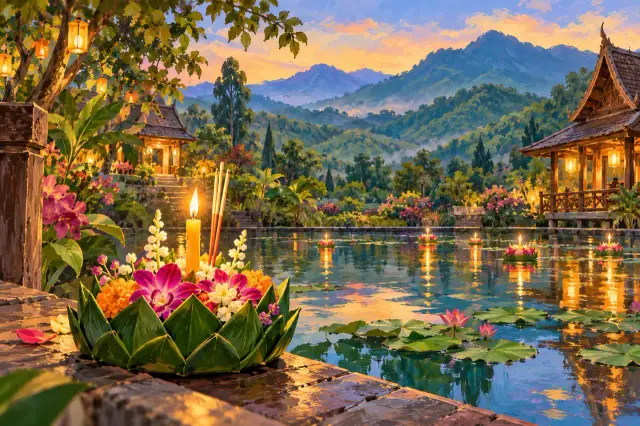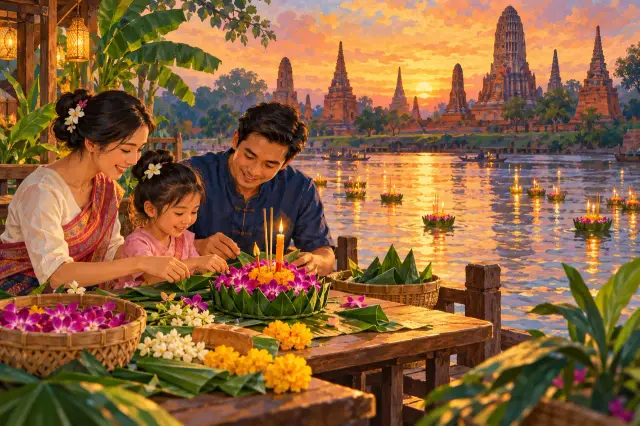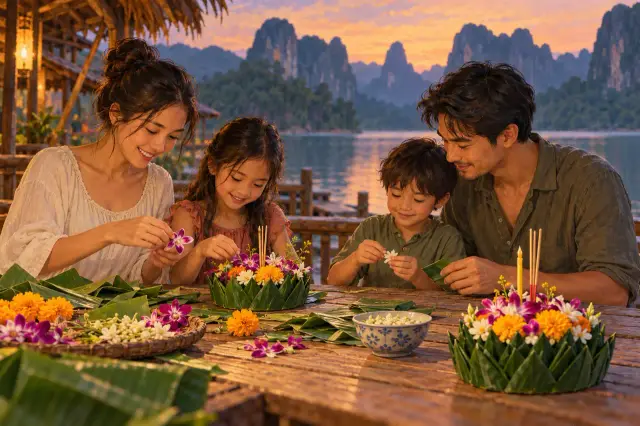
Loy Krathong in Pai can be an intimate part of a valley stay, but the useful first step is finding the current local arrangements. A river beside a guesthouse is not automatically a public floating venue, and Pai is not a small version of Chiang Mai's ticketed mass-lantern festivals. Plan a respectful evening around an actual announced or host-confirmed activity.
Confirm the date, place and permitted activity
Loy Krathong follows a lunar calendar and its Gregorian date changes. Ask your accommodation for the current municipal or community notice, including the location, start time and access arrangements. If a property offers a private activity, confirm whether it is open to non-residents and how it handles candles, cleanup and the river edge.
Do not assume sky-lantern release is included or permitted. Floating a krathong on water and launching a lantern into the air are different activities. Current local restrictions, aviation considerations and fire rules apply, and a shop selling a lantern does not establish permission to use it.
If no suitable activity is confirmed, you can still enjoy a town dinner and observe the evening from a public area where access is allowed. There is no need to manufacture a ritual or walk onto private property to obtain a photograph.
Make the daytime a genuine Pai visit
Start with Wat Nam Hu if open, keeping the visit separate from any evening ceremony. Then continue to Santichon Village for tea and a shared lunch. This gives you a cultural and food-focused day without the long transfers of a regional loop.
If visibility is good, add Yun Lai Viewpoint. A daylight stop is enough; you do not need to combine a pre-dawn departure with a late festival night. Ask about the road and walking conditions after rain, and leave time to return to your hotel before evening.
For families, use just one of those stops, lunch and a rest. Tired children at a crowded dark riverbank are unlikely to enjoy a ceremony. Saving energy is a useful part of the itinerary rather than wasted holiday time.
A town meal before the river
Investigate Pai Walking Street when operating, or reserve an ordinary town restaurant. TAT describes seasonal differences in the market's pattern, so confirm locally rather than assuming the holiday guarantees opening. Eat before heading to the community activity so you are not searching for food while everyone else is arriving.
Try a cooked northern dish or fresh noodle meal and keep bags small. Carry a light layer, a phone with your saved hotel location and only what you need. If staying outside town, arrange a return transfer with an exact meeting point that remains accessible after any closure.
Participate with less waste
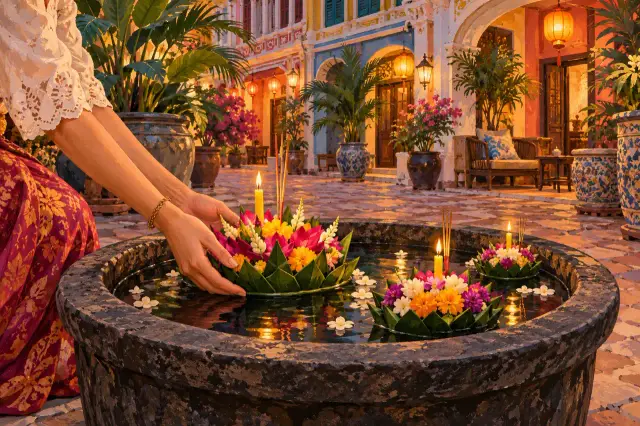
Use a managed floating point only when organizers permit it. Share one small natural-material krathong, avoid foam and plastic decorations, and follow any local preference for a display or alternative that avoids putting material in the river. Natural materials still require cleanup when many people use them.
Do not step onto a dark bank, lean from a bridge or enter the water to push a krathong farther away. Keep children close and candles supervised. Do not buy fish, turtles or other animals for release, and leave packaging in the proper bins rather than on the bank.
Ask before photographing a personal ritual at close range. Observing quietly, sharing food and learning why the community celebrates can be more valuable than trying to stage the same image as every other visitor.
Access, weather and getting back
River access can change after heavy rain. A bamboo or narrow footbridge is not necessarily suitable for a crowd, wheelchair or stroller. Ask your host about the actual surfaces, toilet access and safe route before leaving, and choose an alternative if the answer is uncertain.
Do not combine a long canyon outing at sunset with an event beginning immediately afterward. Pai Canyon is exposed ground, not a shortcut to the festival or a safe place to linger in the dark. A short valley day and a carefully planned evening will usually feel more complete than a frantic series of viewpoints.
Choose the base and arrival that fit your route
The road journey from Chiang Mai is winding. Keep arrival and departure days light, allow a generous transfer window and do not book an important meal immediately after the scheduled arrival. A scooter is not essential to enjoy Pai. A hired driver for a half day is often the better choice for visitors unfamiliar with steep bends, loose surfaces or riding in holiday traffic.
A valley day that avoids crisscrossing Pai
Choose the western side of the valley for a cultural morning. Wat Nam Hu and Santichon give different perspectives, and a tea stop around Yun Lai can follow if road conditions and visibility suit your group. The village is a place for food and local life as well as photographs. Order a meal you have discussed with the restaurant, leave time to drink the tea and avoid assuming that a community visit includes a staged performance. If a guide is available, ask what the visit contributes to the businesses and people hosting it.
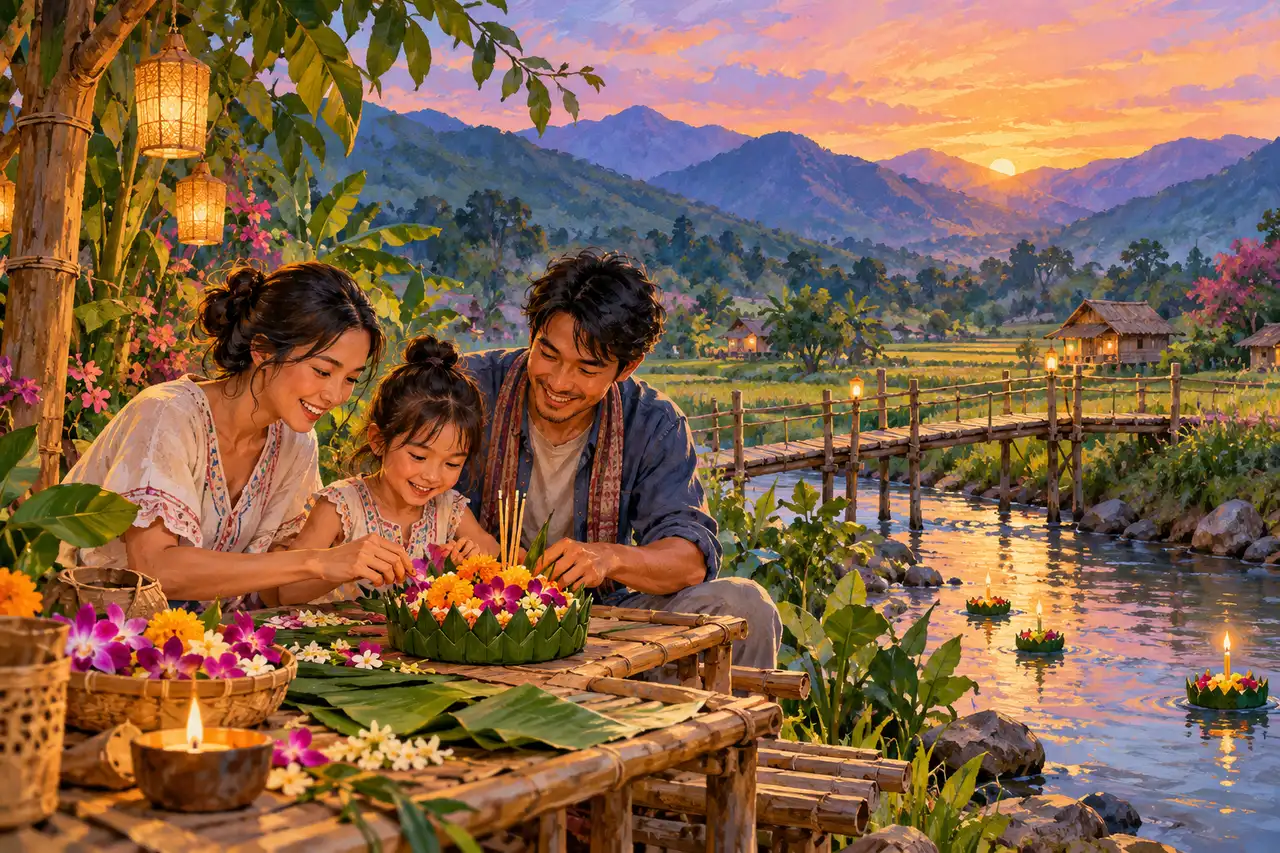
For another day, compare Pam Bok's Boon Kho Ku Sui bamboo bridge with the southern valley stops rather than automatically adding everything. TAT describes the bridge as a bamboo route through rice fields at Pam Bok. The surface can be uneven, field conditions change with the farming cycle and a green photograph does not guarantee green rice on your dates. Ask about current access and fees, wear shoes with grip and keep clear of working plots. This is an agricultural landscape, not a garden maintained for visitors to walk anywhere they choose.
Pai Canyon requires a different decision. You can appreciate the landform without following a narrow ridge, particularly with children or anyone uncomfortable with heights. Leave enough daylight for the walk back and the drive to town. Do not add a canyon sunset to an evening event with a fixed start unless you are prepared to leave early. A viewpoint is more enjoyable when you can turn around freely rather than feel forced to complete a risky section for a photograph.
Wat Phra That Mae Yen is another outing where the climb should be discussed honestly. The government tourism description notes more than three hundred steps to the large white Buddha. Keep temple clothing suitable, carry water and use your own turnaround point. If the climb is unsuitable, choose a vehicle-accessible valley stop and a cafe instead. A restful day can still show you the landscape, especially when the journey from Chiang Mai has already taken more energy than expected.
Choose meals and accommodation as part of the same route
A town stay suits travelers who want to finish an ordinary dinner on foot. Before booking a rural bungalow, ask for the walking route in daylight and after dark, not just its distance from the center. A river crossing, steep track or unlit road can change the practical meaning of 'near town.' Ask where a car can pick you up and whether the property helps arrange late returns. Keep the accommodation address saved in Thai as well as English.
For a seated special meal, use the direct dining information from Pai Village or Reverie Siam to ask about the current menu, outside guests and reservations. Their existence does not confirm a holiday package. At Santichon, share Yunnan-style dishes only after checking the preparation and ingredients; pork leg and steamed buns are useful things to ask about, but a particular kitchen's daily menu controls the choice. On the walking street, buy freshly cooked portions and pause between stalls rather than balancing the whole meal while moving through a crowd.
Use November 24, 2026 as an anchor, then verify the local programme
The 2026 Loy Krathong planning anchor is November 24. The Thai government's dated Sukhothai announcement places that city's programme on November 15 to 24; it is evidence for Sukhothai, not a programme for every northern town. Local venues, performances, closures and managed floating points require their own current announcement. Do not copy a previous year's riverbank location into a fixed itinerary without checking it again.
A river festival and a sky-lantern event are different things. Never assume that purchasing a lantern gives permission to release it. Aviation, fire and local restrictions apply, and event rules can differ between sites. A controlled private event outside a city also needs a precise location and return transfer. Its ticket does not automatically include access to public celebrations somewhere else.
Choose participation that fits the actual site
Use a supervised point only if organizers permit floating there. A dark bank, bridge or hotel terrace is not an alternative launch site simply because water is visible. Consider sharing a single small float or joining a managed display that keeps material out of the river. Natural materials still need cleanup; avoid foam, plastic decorations and animal releases. Watch candles and incense closely, especially with children.
For the easiest evening, eat early, bring only a small bag and choose an edge of the gathering with a clear route out. Ask about seating, toilets and step-free access before selecting a venue for older relatives. Keep the following morning relaxed. The celebration is better experienced with time to observe and listen than through a rushed stop between two long drives.
The route decision for this particular holiday
The Pai River can be part of the evening atmosphere without becoming a place to enter the water. Follow the current organizer's access plan and keep dark banks and informal bridges out of the route.
Compare the Pai destination overview when choosing your base.
Sources and checking the next celebration
Editorial check: 16 October 2026. The routes above are editorial suggestions. An earlier year's festival listing establishes what happened then, not the dates, lineup, prices or permissions of a future edition. Recheck organizer notices before paying for travel.
- TAT: Loy Krathong in Thailand, historical festival context.
- TAT: Pai Walking Street.
- Thai government: Pai cultural sites and viewpoints.
- TAT: Pai Canyon's natural terrain.
Browse Pai tours and activities for available experiences, and compare the actual pickup area, duration and cancellation policy before booking.
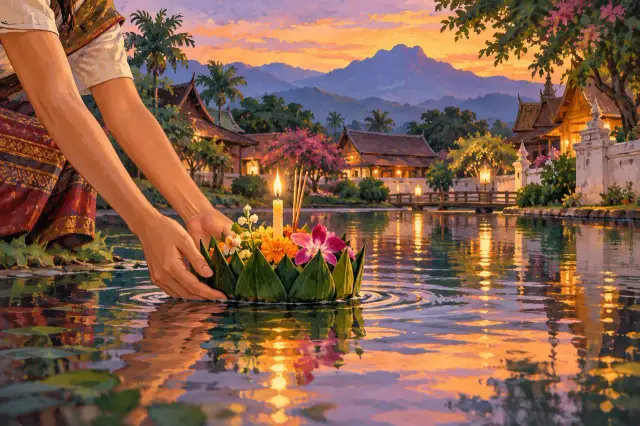
Cover: an original editorial illustration of the holiday atmosphere, not a photograph or confirmation of a particular venue or event.