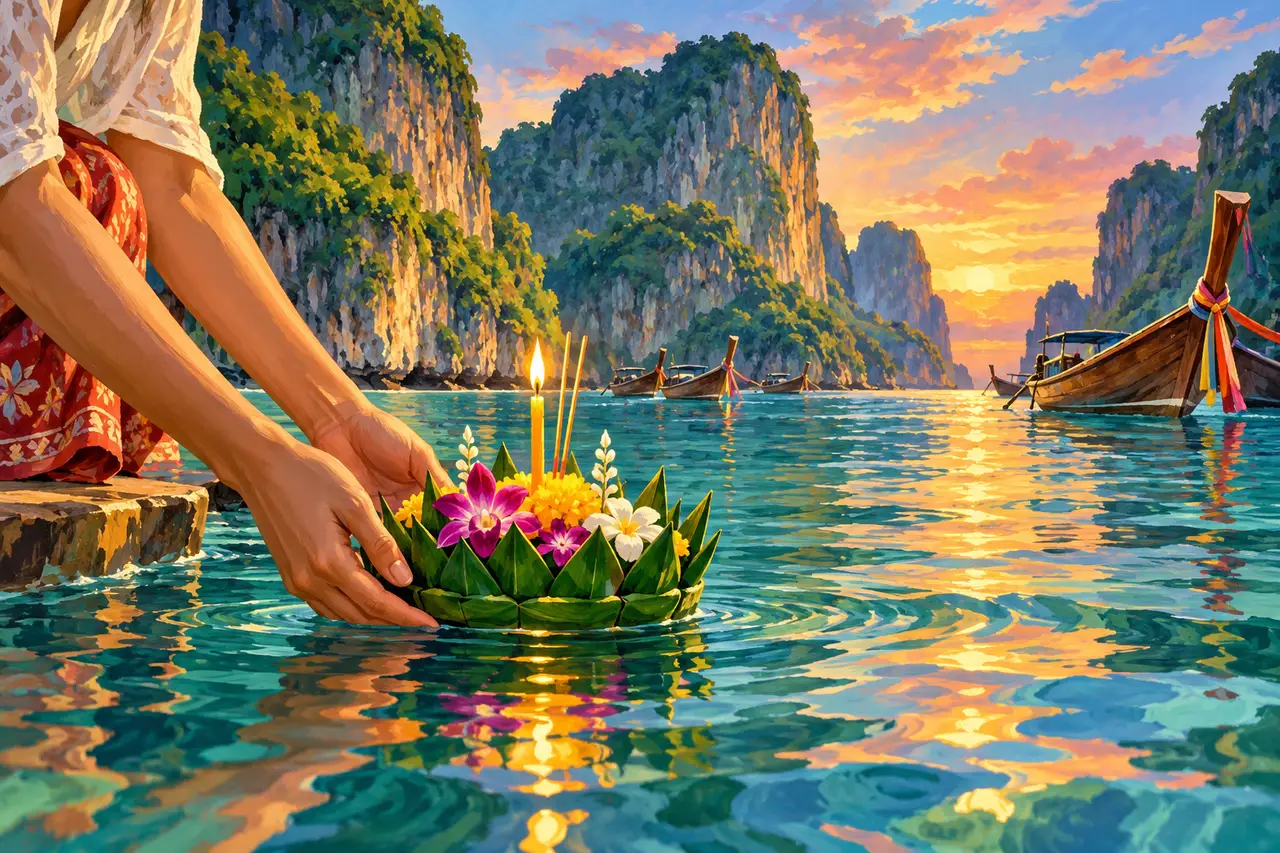
On Phi Phi, Loy Krathong is an opportunity to think about the water that makes the island special. It should not become an instruction to launch objects into a protected bay. Choose a host-led ceremony with clear environmental arrangements, or enjoy a meaningful no-release evening with food, conversation and marine learning. There is no verified island-wide public programme in this guide.
Editorial check: 16 October 2026. Use Tuesday 24 November 2026 as the Loy Krathong planning date, then confirm the actual local ceremony. National calendar dates and historical examples do not establish a programme at a particular waterfront or hotel. Map pins are orientation points, not permission to release an offering. Routes are editorial suggestions. Ask the host who retrieves any material, choose a contained demonstration or observe without a release. A ceremony elsewhere in Thailand is not evidence that sky lanterns or fireworks are permitted here.
Ask the right questions about a real ceremony
Contact your hotel before arrival: is it organising anything on the correct lunar date, who can attend, where is it held and how are materials retrieved? A resort dinner, a craft activity and a public ceremony are different things. If staff propose open-sea floating without a collection arrangement, choose observation or ask for a contained alternative instead. A plant-based float can still become waste when it drifts beyond reach.
The Thailand Foundation's cultural explanation provides useful background to the water offering. Read it before the evening so a brief local explanation has context. Share one permitted item rather than making one per person, and leave bread, plastic, foam and glitter out entirely. Sky lanterns are not a necessary part of this water festival.
A daytime visit that gives the evening substance
Ask about booking a visit to SAii Phi Phi's Marine Discovery Centre in Loh Ba Gao. The resort describes marine education and conservation work, making it a relevant place to learn why material left in coastal water matters. Confirm visitor access and transport from your own bay. A centre visit does not guarantee animal handling, a special festival demonstration or unrestricted entry.
Keep the rest of the afternoon nearby: eat a Thai lunch, rest and walk your own beach in daylight. If staying in Tonsai village, ask a host where visitors may observe a current community gathering. Do not mistake ordinary boats or family activities for a staged tourist event.
A family celebration with no release
Make a small reusable table decoration, discuss the meaning of gratitude for water and have dinner together. Children can draw the marine life they learned about rather than sending decorations into the bay. Keep candles in an authorised safe setting, and never create an independent beach fire. For small children, an early meal and room return are more comfortable than waiting at an unlit shore.
November travel still needs weather flexibility. Do not commission a night crossing simply to visit a different bay's ceremony, and keep a small torch for the return walk. The holiday's value is the respectful participation and understanding, not the number of floats in a photograph or the scale of an unconfirmed show.
Turn marine learning into a practical family celebration
For a Loh Ba Gao stay, ask the Marine Discovery Centre staff what visitors can learn about coastal waste and the animals affected by it. If a guided visit is available, make that the daytime centrepiece and let children choose one thing to explain at dinner. They can draw the coast, decorate a reusable card or write a wish to take home. The festival still has a visible, personal ritual without sending anything into the sea.
For Tonsai, ask a local host whether there is a currently organised community gathering and how visitors may observe. Have an early meal in the village, walk to the agreed location and choose a place clear of the working boats. Keep hands free near the shore and give families carrying out their own ritual space. If there is no confirmed programme, keep the meal and explanation rather than promising an event elsewhere on Don.
For a remote bay, ask the lodge to explain the water tradition at the dinner table. If it offers a contained display, clarify who collects everything and when. A shared small craft can be enough for a whole family. Finish before children are exhausted and use a torch for the room return. Do not book a night longtail just to photograph a different bay's lights; the holiday is easier to appreciate when the journey itself remains calm.
Keep any ceremony inside the managed plan
Ask the accommodation whether a 24 November 2026 ceremony or demonstration is actually scheduled and where materials are collected. Loh Dalum, Tonsai and a remote resort shoreline are different settings; none is automatically an approved release site. A host-led explanation followed by dinner is enough when no retrievable ceremony is offered.
For a village stay, eat before any gathering and keep the return on established paths. For a remote bay, stay with the lodge's confirmed programme instead of commissioning a night boat to search for lights elsewhere. Children can learn how rubbish travels from shore to reef, then make a reusable table decoration. That connects the festival to the sea they are visiting without adding bread, plastic or plant material to protected water.
Understand the two islands and the bay you are booking
Phi Phi Don is the accommodation island; Phi Phi Leh is a separate managed excursion destination. Sleeping on Don does not provide unrestricted access to Maya Bay. Within Don, Tonsai village, Loh Dalum, Long Beach, Loh Ba Gao and Laem Tong also involve different practical arrangements. TAT's Phi Phi Don overview is useful for locating the named bays. Put the hotel pin beside the ferry arrival point before choosing the room, especially if the booking photograph shows a quiet beach away from the village.
A central room suits travellers who want meals and nightlife on foot, but ask about sound at the actual building. A northern or eastern resort can suit a more settled holiday, provided its arrival boat and dining arrangements work for you. A resort dining booking in another bay needs a complete outward and return journey. The island does not have a road taxi network connecting every beach, and a promised walking route needs its own check for surface, darkness and suitability. Do not make an unfamiliar coastal walk the essential last leg after dinner.
Compare a ferry booking with the whole transfer
Ask the seller to identify the mainland departure pier, check-in requirement, arrival bay and any last longtail leg to the hotel. A ticket to Tonsai is different from a transfer that ends at your resort. Tell the accommodation the actual sailing you have booked and ask who meets you. Keep the booking and room pin available offline. With several travellers, make sure the luggage allowance and boarding arrangement fit the group rather than comparing fares alone.
For children or a traveller who needs assistance, describe the boarding issue in advance. Pier steps, beach boarding, boat movement and the hotel's own access matter as much as the room. Ask about child-sized life jackets and assistance without assuming every vessel carries the same equipment. A quiet resort photograph does not show what happens on arrival in rain. Keep a dry change of clothes, necessary medication and essential documents in a small bag you can retain during the transfer.
Choose an excursion by its purpose
For a Maya Bay trip, ask the operator about the current national-park opening, the actual landing route and rules for entering the water. A historical government closure notice explains the conservation context, but it is not a current timetable. Make sure the seller will follow the park's instructions if access changes. A private charter buys a boat arrangement; it does not buy private access to a public protected site or an exemption from a ranger's directions.
If the main interest is snorkelling, ask how much of the day is in the water rather than on landings, what supervision is supplied and how the route suits beginners. Tell the operator if someone is a non-swimmer instead of assuming a life jacket makes every stop suitable. Ask what happens when a guest wants to remain aboard and whether shade, drinking water and a usable toilet are available. A shorter appropriate trip can be better for a family than the longest list of bays. Keep wildlife sightings as possibilities, never guarantees.
Make the resort meal distinct from the transport purchase
SAii's current dining pages identify real restaurants at Loh Ba Gao. Contact the property for the specific date, menu and outside-guest policy. A table, a room package and a boat transfer can be three separate bookings. Ask what happens if the outward or return boat cannot operate, and keep those terms with the meal confirmation. If the journey feels disproportionate, reserve a suitable table in your own bay and enjoy the landscape where you are already staying.
For an independent village meal, order enough rice, vegetables and a protein dish for the group, then add more if needed. Explain allergies and check seafood pricing before the kitchen starts. Buying a small normal meal and one good dessert is a valid celebration. Ask about minimum spend, compulsory menus and final tax and service for any special table. A dinner described as romantic or festive does not establish privacy, drink inclusions or a particular view from every seat.
Protect a full island day from the flight home
Avoid planning the final ferry as a connection with no slack before an expensive flight. Sea conditions, pier transfers and mainland road traffic are separate sources of delay. If the itinerary allows, place the final mainland night before the flight rather than after a late island party. Confirm checkout and luggage storage, then keep the departure morning for reaching the pier. A last snorkelling trip is rarely worth making the onward journey fragile.
For rain or unsuitable sea conditions, remain in your own bay and ask what covered or shore-based activities are actually running. A marine education visit must have confirmed visitor access; it is not a walk-in promise for every non-resident. Do not improvise an offshore swim or unlit viewpoint walk to replace a cancelled tour. Use the Phi Phi destination guide and island activities to compare routes that fit the bay and the real amount of time available.
Save the places in this route
Marine Discovery Centre · Tonsai village
Browse Phi Phi Islands experiences to compare duration, pickup and included costs for a separate outing. Recheck the linked organiser for your dates; the editorial check for this guide was 16 October 2026.
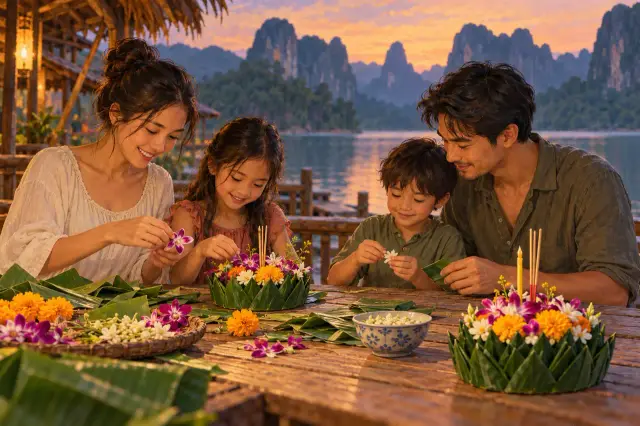
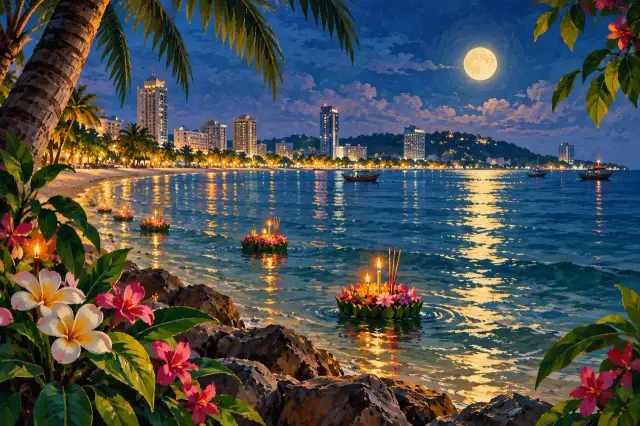
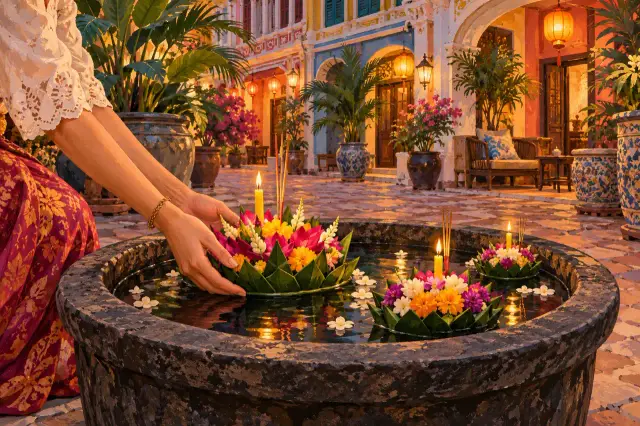
Cover: an original editorial illustration of the holiday atmosphere, not a photograph or confirmation of a particular venue or event.