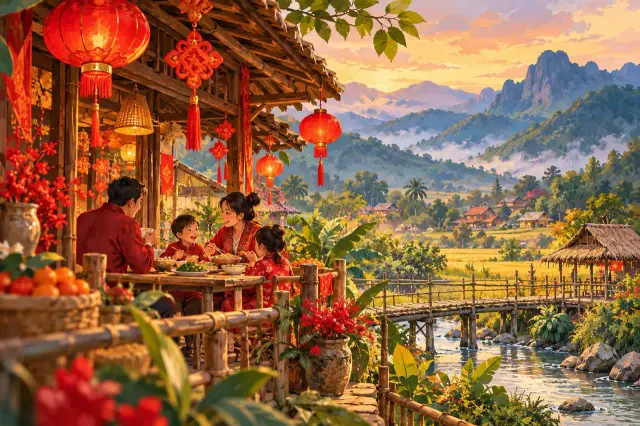
Chinese New Year in Sukhothai is best planned as a cultural and food trip, with any current community celebration verified before you travel. The province includes Sawankhalok as well as the famous old-city monuments, and those places need separate transport planning. Do not assume that a Chinese opera event or decorated shrine automatically happens on the Lunar New Year date.
Sawankhalok offers context, not automatic dates
Save Sawankhalok and ask the municipality or local tourism office about public activities around Lunar New Year. Check the organizer, venue, date and access rather than relying on an undated image of lanterns or a lion dance. A community event can take place on nearby weekends instead of the exact first day of the lunar year.
The Thai government's 2026 Sawankhalok Chinese Opera Festival listing gives a real example of Chinese community culture at Pueng Thao Kong shrine. That edition ran 3 to 12 July 2026. It was not Chinese New Year, and those completed dates must not be repackaged as an upcoming February programme. The distinction helps you avoid booking the right place for the wrong event.
Visit communities on their own terms
If a shrine welcomes visitors, dress respectfully, watch where other people stand and ask before photographing worshippers or offerings. Keep clear of incense, firecrackers and procession work, especially with children. A family ceremony or a business closing for the holiday is not an invitation to enter private space.
If no public programme is announced, a daytime heritage visit can still be worthwhile, but be honest about why you are going. Do not make a long transfer solely for an assumed show. Ask a local guide what can actually be seen on the date and agree the route and waiting time before reserving a driver.
Give the Sukhothai part a real itinerary
Spend one early morning at Sukhothai Historical Park. Start with Wat Mahathat, add Wat Sa Si and stop for a drink before deciding whether to continue. Use a bicycle only when everyone is comfortable with the route and conditions.
Wat Si Chum deserves a separate, unhurried stop if you want another major monument. Do not combine every archaeological zone, Sawankhalok and a distant food village into a single crowded day. The province is more rewarding when each place has time to make sense.
A shared meal with specific leads
Look up Je Hae Sukhothai Noodles or Mai Klang Krung, both named in TAT's Thai Foodie Map. Confirm current opening during the holiday and ask about ingredients. The local noodle style provides a concrete taste of the region, whether or not a restaurant has a special New Year menu.
For a group meal, choose dishes you can comfortably share and check allergies, chili, pork and peanuts. Do not assume a vegetarian request automatically excludes animal-based stock or sauces. Keep some flexibility for family businesses to alter their hours, and have an alternative rather than depending on a single shop.
A useful three-day structure
Use arrival day to settle into the correct old-town or modern-town base and eat locally. Spend the second morning in the historical park, rest in the afternoon and enjoy a reserved meal. Use the third day for Sawankhalok only if you have a confirmed reason and transport, or choose a museum or craft activity that is actually available.
Check Lunar New Year dates for the travel year, reserve key rooms and transfers and leave margin for holiday movement on the roads. Buy locally made work only after asking about its maker and material. A thoughtful trip here comes from the province's living communities, food and architecture, not a promise of spectacle that nobody has announced.
Check the lunar date without inventing a local programme
Lunar New Year's Day in 2027 is 6 February, as shown by the Hong Kong government's calendar. That verifies the calendar date, not a public holiday designation or a lion-dance schedule in this Thai destination. Local celebrations, family meals and business closures can extend over other days. Ask the relevant municipality, shrine or venue for an announcement identifying its own date and public access.
Build the trip around food and a meaningful heritage route before adding an event. A decorated shop does not establish a procession, and a community's annual shrine or opera festival may follow a completely different calendar. Check the year on every poster and the location on the map. If the only material you find concerns a completed festival, keep it as background rather than treating it as a future booking lead.
For a shared meal, ask restaurants about holiday hours and reserve for the full group. Compare dishes and portions as well as the price, and check stock, sauces, seafood and nuts when dietary needs matter. Have a second choice in the same area so a family-run business can close without forcing a long journey across the destination.
At a shrine or public ceremony, observe where visitors stand and ask before close photographs of people and offerings. Leave working space for attendants and procession teams. Children or anyone sensitive to smoke and sudden noise may prefer a brief daytime visit and a meal afterward. Participation should fit the community's invitation rather than a visitor's expectation of spectacle.
Give Sawankhalok a separate reason and a separate day
The government's Chinese Opera Festival archive describes a real Sawankhalok event in July 2026. It is useful evidence of community culture, but not a February 2027 timetable. Confirm a current Lunar New Year invitation before making a special event journey to the shrine. If your interest is ordinary heritage instead, say so when arranging the guide and build the route around places that will actually be accessible.
Keep the central Sukhothai monuments for another morning, with lunch and rest near your base. Sawankhalok, Si Satchanalai and Muang Kao are not a single compact sightseeing neighborhood. For a short stay, choosing the historical park and one good shared meal can be a stronger holiday than spending most of the time in a vehicle chasing unverified performances.
Understand the old-city zones before choosing your ticket or bicycle
Start with the central historical-park area and decide whether another zone is worth a separate visit. Wat Mahathat and Wat Sa Si make a coherent first morning. Wat Si Chum belongs to a different stop, while Si Satchanalai Historical Park is another substantial provincial excursion. A province map can make all three look like one afternoon's work. Give each visit enough time for a guide's explanation, photographs from permitted paths, water and a rest, and remove a stop when the heat or your group's energy changes.
At the ticket office, explain your intended route and ask about the current admission for the relevant zones, bicycle or vehicle arrangements and opening times. A ticket for one area should not be assumed to include every archaeological site or museum. If renting a bicycle, test the brakes, check seat height and agree where it must be returned. A person who has not cycled for years does not need to relearn on a hot holiday afternoon. Arrange a driver or another locally permitted option instead, and ask about the walking that still remains after the vehicle stops.
Ask a guide to focus the route. For a first visit, the questions can be simple: how the city was laid out, why the temple forms differ and what the surviving sculpture helps us understand. You do not need to memorize a list of kings to enjoy the architecture. A short, well-paced explanation around Wat Mahathat can be more useful than a long circuit of names without context. Confirm the language, length, meeting point and whether entry tickets are included before reserving.
The TAT Sukhothai brochure helps identify museums, archaeology and crafts across the province. It is a planning background source, not a current timetable. Phone or message the specific venue if a museum, demonstration or workshop is the reason for making a separate journey. Ask whether an advertised ceramics activity involves hands-on making, watching a demonstration or visiting a shop, and how a fragile purchase can travel home.
Choose the base that matches the morning you want
Muang Kao, near the historical park, is useful for a short early route and a return to your room during the afternoon. Modern Sukhothai is a different base, so check the journey to the park, the transport back after dinner and the convenience of your intercity arrival. A hotel's name may refer to Sukhothai while its location fits neither your intended evening nor the easiest heritage visit. Save the actual pin and ask about the approach with bags before booking.
For children or older relatives, look beyond the swimming-pool photograph. Ask about room steps, covered access to breakfast, shade and how close a vehicle can come to the entrance. In the park, choose a route with planned pauses and agree an easy place to reunite if some travelers want to stop. Flat terrain can still be tiring in sun, and uneven brick or a pond edge demands care even when the path looks peaceful.
Food should also follow the route. A local noodle lunch near where you are staying can be a better decision than crossing the province for a particular bowl between two timed visits. Ask whether the broth contains pork, whether peanuts can be left out and whether the kitchen can manage an allergy. For khao perb or another regional specialty, verify the shop and opening before making it a destination in its own right. A photograph on a food map is an introduction to a place, not a reservation.
Build your budget from the room, arrival transfer, daily transport, relevant entry tickets, meals and any guide or workshop you actually want. Keep festival seating separate from ordinary heritage admission. A cheaper room can cost more overall if every meal and visit requires a hired ride. Conversely, a comfortable old-town base may make a short stay feel generous without a large activity bill. Spend where it changes the experience: a clear explanation, a convenient return during the heat and time to see a few places properly.
Sources and current event information
Editorial check: 16 October 2026. TAT Sukhothai, TAT cycling itinerary, DASTA regional dishes, TAT food map, and TAT Sukhothai brochure. The older brochure is background, not a source of current prices or schedules. Thai government Sawankhalok Chinese Opera Festival archive concerns July 2026, not Lunar New Year. Future Lunar New Year programmes require current municipal confirmation. Venue operating arrangements, transfers and event programmes can change; confirm the published programme for your travel year before buying tickets. Suggested itineraries are editorial recommendations.
Browse Sukhothai activities to compare real departure dates, pickup arrangements and inclusions.
Continue with the Sukhothai destination guide for the wider area and compare activity pickup points before reserving. Images illustrate the holiday theme; they do not verify an event or a venue programme.
Cover: an original editorial illustration of the holiday atmosphere, not a photograph or confirmation of a particular venue or event.