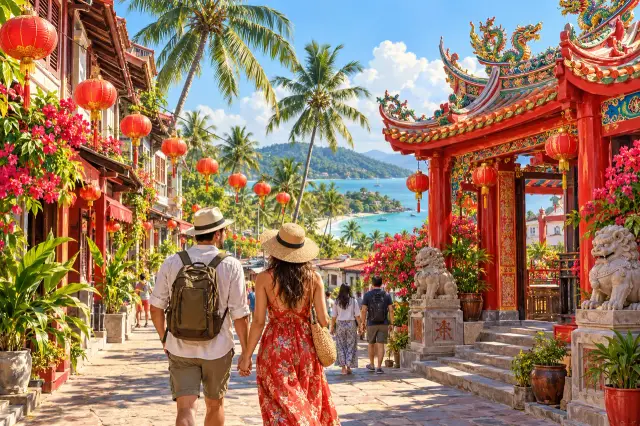
Nathon gives a Samui trip a different scale. Around the resort beaches, your day may be organized by hotel facilities and excursion pickups. Here, public offices, shops, markets, deliveries and ferry traffic share the same town. Visiting works best when you participate lightly in that ordinary rhythm: buy breakfast, look closely at a shopfront, pause for a drink and leave people room to work.
The route in this guide is deliberately flexible. It connects the waterfront with the older streets behind it, returning to the sea rather than adding a long list of scattered attractions. The suggested allowances are editorial estimates and depend on weather, mobility and how long you like to linger over food.
Understand what makes Nathon different
Samui municipality's Nathon community description identifies three connected old streets and emphasizes the town's transport, administrative and commercial roles. That is a useful framework for a visit. You are looking at a neighborhood shaped by movement and trade, where the interesting details are distributed across ordinary buildings.
Avoid treating “old town” as a promise of a preserved museum district. Buildings have changed uses, signs are modern and streets remain practical places for residents. Some fronts may be freshly painted while others show years of repairs. Look at the relationship between upper stories, folding doors, awnings and the space used for merchandise, rather than searching for one perfectly historic photograph.
Nathon also offers a counterpoint to Bophut's visitor-focused village streets. Both can be worthwhile, but they serve different purposes in an itinerary. Choose Nathon when you are curious about an island town and are comfortable making your own discoveries. If your priority is a long beach afternoon with nearby resort facilities, keep that as a separate plan.
Choose a morning or late-afternoon visit
A morning visit suits travelers interested in everyday shopping and a meal before the strongest heat. Start with the streets, take a seated break and finish on the waterfront. The exact mix of open stalls and shops varies; do not travel across the island for a single unverified vendor or dish. An ordinary café and a few active shops are enough to anchor the walk.
A late-afternoon visit creates a different rhythm: browse while daylight remains, eat and then return to the coast. The municipality's Nathon Beach page highlights the waterfront's evening appeal and local food market. Reconfirm current market arrangements through your accommodation or locally before making them the central attraction.
If sunset matters, give it a window rather than a minute-by-minute deadline. Cloud can change the light or hide the sun, and a pleasant harbor evening does not require a clear horizon. Plan dinner or a drink as the primary experience and let the sky add to it. An afternoon thunderstorm is a reason to shorten the exposed section, not to wait indefinitely at the water's edge.
Begin at a clear waterfront meeting point
Ask your driver to drop you at an agreed public meeting point near the town waterfront, then save the pin before walking away. “Nathon pier” can be too imprecise when different vehicles and operators are involved. If you are being collected later, confirm which entrance or side of the road the driver means and whether you need to walk away from a busy loading area.
Spend a few minutes orienting yourself. Locate the sea, the road behind it and an obvious route into the commercial streets. Take a photograph of your meeting point if that helps. Keep valuables and travel documents with you, but avoid carrying a whole beach bag when the outing is mainly on foot.
The waterfront is a place to observe traffic and boats from a suitable public position. It is not an invitation to enter operational areas for a closer picture. Give port workers, passengers and vehicles space; follow barriers and signs. A visit can be absorbing without walking to the end of every pier or photographing people handling luggage at close range.
Make a loop through the older streets
Turn inland and explore a manageable section of the older commercial lanes. The municipal account describes the waterfront road, a middle street with wooden shop houses and folding doors, and a market-side street. Use those three parallel strands as an orientation tool rather than insisting on a precise turn-by-turn circuit that may be interrupted by roadworks or deliveries.
Walk one street in one direction and return by a neighboring street. This gives you variety without the feeling of continually retracing steps. Cross where you can see traffic clearly. Pavements and road edges may be uneven or occupied, so concentrate on short comfortable sections instead of achieving a distance target.
Look above the shop signs as well as at eye level. Upper floors can reveal how buildings differ in materials, proportions and maintenance, while the ground floor tells you what the town needs now. Ask before photographing inside a shop. If a doorway leads to a home or work area, keep the camera outside unless invited. The most respectful photographs often include architectural details and a wider street context.
Let food provide the stopping points
Build the walk around one proper seated meal and perhaps a smaller snack, instead of attempting a checklist of dishes. Decide whether you want breakfast, lunch or an evening market visit before setting out. A vendor preparing food at one time of day may not be operating when you arrive later, even if a map marks the location.
Order by looking at the current menu and asking what is available. If you want to try several things as a group, choose a couple first and judge the portions before adding more. For seafood sold by weight, confirm the weight, preparation and total price before it is cooked. For a snack stall, a clearly understood portion price makes a small purchase straightforward.
Nathon's food scene is part of ordinary town life, not a guarantee that every meal is cheaper or more distinctive than elsewhere on Samui. Compare the actual dish and setting. A comfortable chair, shade and a nearby restroom may justify spending more during a walking day. Use the Samui food and market guide for a wider island context while keeping this visit centered on what is operating locally.
Buy a few useful things and ask better questions
Small purchases can make the visit more engaging: fruit for later, a snack, a practical household item or a gift from a shop you have enjoyed browsing. Ask what an item is made from, where it was produced and whether its price is fixed. If origin matters to you, a general island-themed label is not evidence that something was made on Samui.
Displayed prices are a useful starting point. The Surat Thani Provincial Commercial Office documented price-display checks at Nathon's Pracharat market in September 2025. That notice is evidence of a real local market and official oversight at that time, not a promise about every transaction today. Confirm your own purchase clearly.
Keep bargaining proportionate to the setting. A short courteous question is enough when a price is negotiable; prolonged bargaining over prepared food is rarely a good use of either person's afternoon. If you decide not to buy, thank the seller and move on. Carry small cash so a modest purchase does not require a vendor to produce change from a large note.
When buying food to take away, consider the journey back. A ripe fruit snack that you eat immediately is different from a bag of delicate produce left in a warm vehicle for the rest of the afternoon. Buy modest quantities, ask a vendor to prepare only what you need and use your own reusable bag when practical. Avoid purchasing something solely for a photograph and then leaving it uneaten.
A quieter shop can also offer a better conversation than a stall serving a queue. Keep questions brief when staff are occupied, and let the seller decide how much time to spend explaining. If language makes a detailed exchange difficult, a menu, calculator or clearly pointed item can settle a purchase without frustration. The aim is ordinary, courteous interaction. You do not need access to a private workshop or a family story to have visited the town meaningfully.
Return to the sea without planning a swim
Nathon's waterfront is best approached as a port landscape. The Ko Samui Customs Office's visitor publication distinguishes its harbor and town setting from a swimming beach. Piers, boats and shore conditions are reasons to choose another location when swimming is the main goal.
After the street loop, find a suitable public place to sit or stand and watch the scene change. The interesting movement may be a ferry arriving, changing light on the water or residents gathering after work. Keep access ways open and avoid climbing seawalls, mooring equipment or boats for a better viewpoint.
If you are photographing sunset, arrive with time to choose a position and then stay there. Running between several spots often produces a less enjoyable evening. A wider composition that includes the town's working character may say more about Nathon than a tightly cropped sun. If the sky stays flat, the walk and meal still stand as a worthwhile visit.
Combine a visit with a ferry only when the logistics fit
Nathon can be a convenient introduction to Samui when your actual ferry arrives there. Seatran Ferry's official booking page identifies its Samui terminal as Nathon. Read the operator and exact location on your own ticket; other Samui services may use a different coast. An island-level label on a booking search is not enough to arrange the correct pickup.
With luggage, ask your transfer provider whether a meal stop is possible and what waiting costs. Do not assume public luggage storage exists or that a shop will look after your bags. If you cannot confirm a workable arrangement, travel to your accommodation first and return to Nathon another day.
Before an outbound sailing, check-in and boarding take priority over sightseeing. Ask the operator for its current arrival requirement and leave a margin for getting from the streets to the correct terminal. Keep the meal modest enough that service delays will not create pressure. A town visit should improve a travel day, not turn it into a race through the port.
Make transport and weather work for the group
From a nearby western or northwestern base, Nathon can fit comfortably into a shorter outing. From Chaweng, Lamai or the far northeast, calculate the full round trip and make the town the main purpose. A private driver can be worthwhile for several people if the price includes the planned evening return. For a solo traveler, ask about shared transport options and the practical final leg to your accommodation.
Any quoted journey time is only a planning estimate. Confirm the total fare, waiting arrangement and pickup point before leaving. If you want to stay until after dinner, book that explicitly. Saving on the outbound journey is less useful if the return becomes difficult once you are tired or the weather changes.
Bring a compact rain layer and use a seated café break during a shower. In sustained heavy rain, shorten the walk and stay away from exposed waterfront areas. Travelers using a wheelchair or stroller should ask about a specific short route and accessible facilities; the existence of town streets does not establish continuous step-free access.
Nathon rewards visitors who leave space for an ordinary afternoon. Pick a few connected streets, make a couple of small purchases, eat somewhere that suits your group and return to the waterfront when the conditions are pleasant. Explore other Koh Samui experiences on another day. Here, the working town itself is the reason to come.