A sunset outing gives a Samui day a simple focus: reach the west coast, settle somewhere comfortable and watch the light change over the sea. The best version does not involve racing between several viewpoints as the sun drops. It gives you one place to understand, a practical way to get there and enough flexibility to enjoy the evening even if cloud changes the view.
The Tourism Authority of Thailand's Japan office identifies sunset scenery as a feature of the island's west coast, including Taling Ngam Beach. That is a useful researched option, but it is not the verified location of the photograph accompanying this guide. This article is about planning an evening on the west coast, with the destination chosen and checked separately, rather than assigning an unsupported beach name to a sky and sea image.
Choose the kind of evening before the location
Decide whether you want an informal shore visit, a meal with a sea view or a stay at accommodation already facing the evening light. These arrangements have different practical needs. A public shore may offer freedom to move but fewer guaranteed facilities. A restaurant can provide seating and a meal, while a room with a suitable view removes the need for a separate journey.
Think about the people coming with you. A photographer may want to arrive early and stay through the changing light, while someone else may prefer a comfortable table and a short walk. Families may value toilets and a straightforward route back to the vehicle. Choose a setting where these needs can coexist instead of expecting everyone to stand at the water's edge for the entire evening.
If the trip is mainly about quiet time together, do not overcomplicate it. One shore and a nearby meal can be enough. A long cross-island itinerary with several compulsory stops makes the final part of the day dependent on everything earlier running exactly as planned. Keep the sunset outing modest enough to remain pleasant when traffic or weather changes.
Use Taling Ngam as an option, not a photo caption
The official TAT Japan description places Taling Ngam Beach on Samui's west coast and highlights its sunset scenery. You can investigate it as one possible destination for the evening. Confirm the precise place where you intend to arrive, how to reach the shore and whether the facilities you need will be available. The broader beach name is a starting point for planning rather than a complete access instruction.
If considering another part of the west coast, apply the same process. Ask your accommodation for a specific accessible viewing place and check it against a map. Do not choose a spot solely because a venue describes itself as a sunset destination. Verify the view from the actual seating area, whether a reservation is needed and how the visit fits your budget.
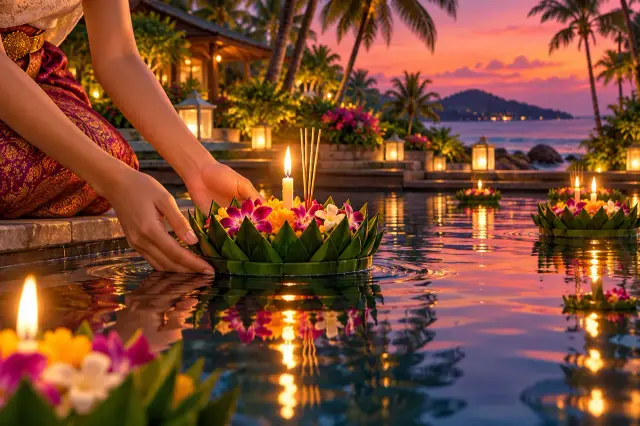
The source of the accompanying image identifies a west-coast Samui sunset without naming a beach. Its pink and orange sky, sea and foreground silhouettes illustrate the kind of changing light that makes an evening worth watching. They do not establish which access path or restaurant to use. Keep that distinction when making plans and when captioning your own photographs.
Work backward from the light
Check a reliable current sunset time for your date and location, then plan to arrive while there is still ample daylight. The journey, parking and walk to the viewing place all happen before you sit down. Allow time to understand the surroundings, choose a stable position and make any necessary change without rushing. A timetable that ends at the advertised sunset minute leaves little room for those ordinary tasks.
Ask about the realistic road journey from your base at the time you intend to travel. Samui's destinations can be close in island terms while still requiring a deliberate drive. Do not rely on a general claim that the island can be circled quickly. Your evening involves one specific route, and its actual conditions matter more than a broad travel estimate.
Decide whether you want dinner before, during or after the viewing period. If the sunset itself is the main interest, avoid an order that requires everyone to move tables or collect food at the same moment. If the meal is equally important, reserve an arrangement that allows both to unfold comfortably. A relaxed plan protects attention for the sky instead of constant clock-watching.
Settle the return before darkness
Arrange transport for the journey home before leaving your base. Agree whether the driver waits, returns at a set time or needs a call. Confirm the fare and a meeting point that is easy to identify after dark. Save the contact details offline and make sure your phone has enough charge. An outward ride is only half of a successful evening outing.
If driving, locate legal parking while it is light and note the route back from your viewing place. Do not block an entrance or assume a business will permit parking simply because you intend to stand nearby. If your route involves a narrow or uneven path, consider whether it will remain comfortable after dusk. A place that is easy to reach in daylight may be less appealing on the return. Bring a small light if the confirmed approach needs one, and keep it pointed toward the ground rather than into other visitors' eyes.
You do not need to hire a scooter for this trip. Choose transport according to competence, appropriate licensing and insurance, and avoid riding after drinking. The Tourism Authority of Thailand advises agreeing taxi fares before departure and urges care with motorbikes. An arranged car can let a group enjoy the evening without making the journey home another activity to manage.
Watch weather without demanding a particular sky
Look at the day's forecast, but keep expectations flexible. Cloud can hide the sun or change the direction and intensity of colour. A photograph records one evening rather than a repeatable performance. Choose a place you would enjoy even if the sunset is subdued: a pleasant sea view, comfortable seating or a meal that makes the journey worthwhile on its own.
Pay attention to the immediate conditions. If wind or rain makes the shore uncomfortable, use an appropriate sheltered place or change the plan. Avoid lingering at an exposed edge to wait for a break in the cloud. A return before the light fades can be the right decision if the group is tired or the approach has become difficult.
Stay for the changing light only while it is practical to do so. Sometimes the most interesting part of the evening is before the sun reaches the horizon; sometimes it is the softer light afterward. There is no obligation to wait for a final photograph. The outing should suit the people present and their return arrangements, not an imagined sequence that the weather must deliver.
Make the shoreline comfortable for everyone
Visit the chosen access route while there is enough light to see it clearly. Check for steps, uneven surfaces and changes in level. Ask about seating and toilets if they matter for your group. For anyone with limited mobility, request precise information before travelling rather than relying on a beach being described as relaxed or easy.
Keep children close around water, roads and edges. Agree on the place where the group will stay so that nobody wanders off while others are absorbed in the view. Carry water and suitable protection from sun or rain for the journey and waiting period. Secure footwear is useful where sand gives way to stones, steps or other uneven ground.
Treat swimming as a separate activity with its own conditions. Do not enter unfamiliar water simply because you have arrived early or because it looks calm in the fading light. Follow local warnings and avoid letting a casual dip delay the return. The purpose of this outing is to watch the evening from a suitable place on shore, which can be satisfying without getting wet.
Take photographs without losing the evening
Start with a wide view that includes the sea, sky and a little of the foreground. Check the horizon and look for a stable position before taking the photograph. A simple phone image can hold the memory well. If you carry a tripod or larger camera, keep it out of routes used by other visitors and avoid occupying a narrow viewpoint for a long period.
Do not step backward toward the water while concentrating on the screen. Move first, stop and check your footing, then compose. Ask before photographing identifiable people at close range. Foreground silhouettes can make a picture interesting, but other visitors are still enjoying their own evening and may not want to become part of a staged scene.
Put the camera down for a while. Watch how reflections shift and how the foreground changes as light drops. Trying to record every minute can make the evening feel shorter. A handful of photographs from a safe position, followed by time simply looking, often gives a fuller memory than a long sequence taken while adjusting settings.
Keep dinner and departure simple
If using a restaurant, look at the menu and prices before ordering. Clarify any reservation, seating or minimum-spend arrangement directly with the venue. A promised sea view does not automatically mean an unobstructed view from every table. Explain dietary needs early and choose food that lets you enjoy the setting without uncertainty about ingredients or the final bill.
If the meal comes after the shore visit, choose somewhere compatible with the return route rather than adding another distant destination. Tell the driver if the plan changes and confirm any effect on waiting time or cost. Keep a sheltered alternative in mind so that a rainy evening does not require making every decision from scratch.
Before leaving, collect belongings, check the path and return to the agreed pickup point with enough time to spare. A Samui sunset outing works when its parts fit together: one confirmed place, daylight for the approach, flexible expectations and an easy way home. The colours may differ from the photograph, but the comfort of sitting by the west-coast sea can still be the evening's lasting pleasure.