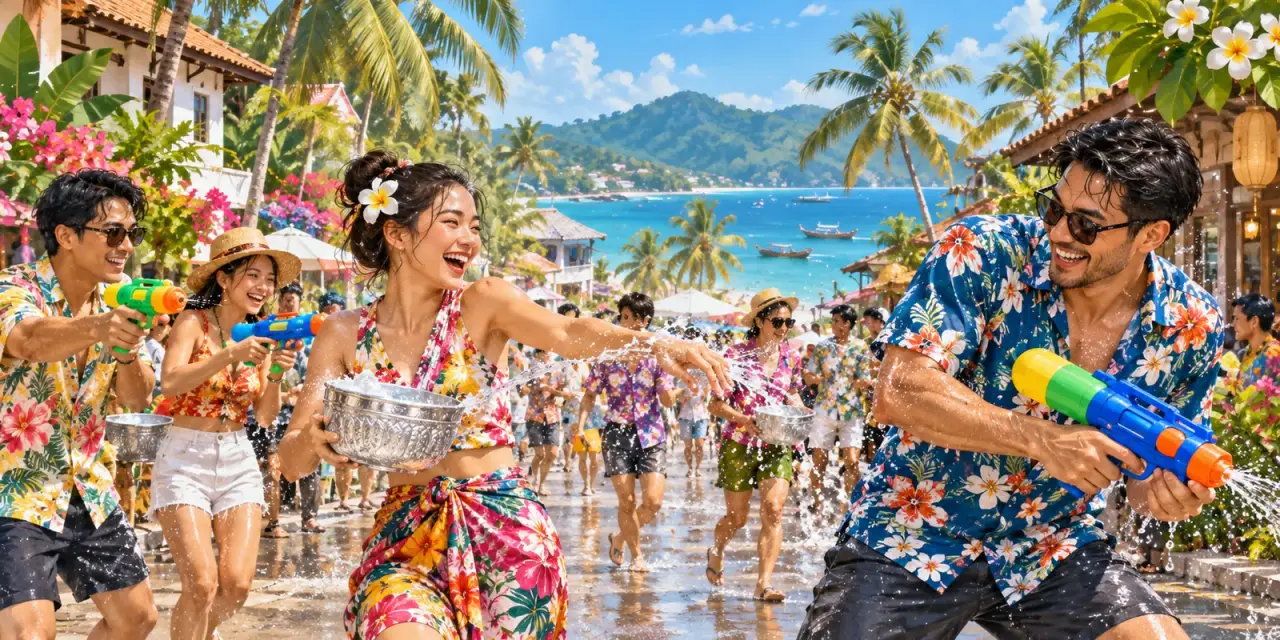
The most useful thing to know about Songkran on Koh Samui is that the national holiday period and the island's biggest street water fight are not the same thing. The traditional festival dates are 13 to 15 April, but Samui's main water-play day is usually concentrated on 13 April, especially around Chaweng. Individual venues may run longer programmes. Arriving on 15 April expecting the same street scene can therefore mean missing the experience you came for.
Songkran is also Thai New Year, with family visits, merit-making and respectful water blessings alongside the parties. You can spend a morning understanding those traditions and still enjoy a lively afternoon. You can also choose a quiet island day without treating the whole festival as something to escape. This guide explains the difference, gives you a workable route and shows how to plan for transport, children and dry breaks.
Editorial check: 16 October 2026. The next festival is April 2027. Named 2026 programmes below are past examples, not confirmed 2027 events. Cover image: an original Songkran travel illustration, not documentary photography.
Dates: what is predictable and what still needs checking
Use 13 April as the key date when planning for Samui's main street celebration, and keep 13 to 15 April available for the broader holiday. The pattern is supported by Bangkok Airways' island guide and local venue descriptions, including ARKbar's 2026 guide. That pattern does not confirm road closures, parade times or a future DJ lineup.
As of this research date, this guide does not claim a confirmed 2027 municipal programme or venue timetable. Before buying an event ticket, look for the year on the actual organizer's announcement, not just a page title refreshed by a search engine. Ask your hotel which roads are affected near your stay and whether its transfer service will operate. Recheck during the week before travel and again the evening before you set out.
If your flight lands on 13 April, keep the arrival day simple. A room in central Chaweng may be close to the celebration but slower to reach once the roads fill. Pack a change of clothes somewhere accessible and ask the property for the driver's recommended approach. Do not book a non-refundable lunch that depends on a precise airport-to-hotel transfer during the busiest period.
What the water means
Songkran's quieter rituals help explain the festival better than a giant water gun. Families may clean their homes, make offerings and pour water respectfully as part of renewal and gratitude. Water poured over a Buddha image or gently over elders' hands belongs to a different setting from a street water fight. The Tourism Authority of Thailand's heritage background explains its recognition as living cultural heritage.
As a visitor, observe first. If a host invites you to participate in a blessing, follow their demonstration rather than inventing your own version. Ask before photographing an individual, leave worshippers space and keep water-play equipment outside sacred areas. You do not need to perform a ritual to appreciate it. A quiet visit and a respectful question can be more meaningful than trying to join every activity.
Dress for both parts of the day if you combine temple and street visits. Wear a light shirt that covers shoulders and trousers or a skirt covering the knees for the temple, then change into quick-drying clothes afterward. A swimsuit alone is not appropriate for a temple or ordinary street. Keep a separate dry bag for respectful clothing so that a wet afternoon does not leave you without something suitable for dinner.
Choose your celebration area before leaving the hotel
Chaweng: the main water-play choice
Chaweng Beach Road is the strongest starting point if you actively want music, crowds and water play. The useful strategy is to arrive at the edge of the busiest area, walk a manageable section and keep a known place to retreat. Do not set out to cover the entire district. A short stretch with friends, a shaded meal and a dry return can be a better day than hours of pushing through people.
Choose your exit before joining in. Save a meeting pin with your group and a second location outside the densest crowd in case vehicles cannot reach the first. Keep your driver's contact offline. A hotel or restaurant with an agreed meeting arrangement is more useful than saying you will meet somewhere along the beach. Confirm whether a venue permits wet clothing and whether entry involves a minimum spend.
Lamai: stay local if this is your base
If you are staying in Lamai, ask your accommodation about the active streets and local timing before committing to a transfer north. A local celebration may give you the community atmosphere you want without the longest journey. Do not assume that a quieter-looking lane stays dry or that a road is closed to traffic unless there is an actual closure in place.
This is a good choice for groups that value an easy return more than the largest party. Keep the afternoon near a familiar restaurant, then walk back or use an arranged short transfer. Check the route on the day: road edges, drains and wet surfaces matter more when the street is crowded and visibility is poor.
Bophut, Mae Nam and a quieter base
Bophut can combine a food-focused evening with a shorter period of water play, while Mae Nam and quieter resort areas can support a gentler day. Neither label guarantees silence or a completely dry journey. Ask the hotel specifically whether its entrance road becomes active and whether there is an alternative drop-off. A room far from the celebration is useful only if you can also eat and relax nearby.
If you want to avoid water entirely, plan an on-property day and tell the hotel that remaining dry is important. Schedule essential errands on another date. Do not expect a verbal request to keep every passer-by from splashing you once you walk into a busy water-play street, even though respectful participation should always consider others.
A practical 13 April route
Morning: a temple visit before the busiest streets
Start with breakfast and a respectful visit to Wat Phra Yai or Wat Plai Laem in the northeast. Pick one if you want a quiet morning rather than a checklist. Ask your accommodation about locally announced ceremonies, but do not treat this suggested stop as a promise that a public ritual will be happening at a particular hour.
As an editorial planning allowance, a visit of 30 to 60 minutes leaves room to observe without hurrying. Arrive respectfully dressed, remove shoes where requested and keep your equipment packed. If a family ceremony or service is underway, stand back and follow the temple's direction. If you want to make a donation, use the designated arrangement rather than giving money to someone simply because they approach you.
Late morning: change, eat and check your return
Return to your hotel or another agreed base to change. Eat a proper meal before joining the street activity and fill a separate drinking-water bottle. Send your pickup pin and return plan to everyone in the group. If you are travelling with children, decide who stays with whom and identify a place to sit down if someone has had enough.
Keep the plan deliberately modest: one main area, one shaded break and one return route. Do not add a waterfall, a west-coast sunset and a boat outing to the same day. Festival traffic makes normal travel estimates unreliable, and the best part of Songkran is joining the moment rather than spending it in a vehicle between attractions.
Afternoon: a manageable period of water play
Enter the busy area on foot from an agreed drop-off where practical. Begin with a short section so you can judge the crowd and noise before committing to more. Stay with your group, keep shoes on and step away from the road when stopping to check a phone. Take a shaded break before everyone is exhausted; leaving early is easier than negotiating a return once you are tired and separated.
Do not spray riders, drivers, monks, babies or people carrying food or electronics. Avoid faces, ears and high-pressure jets, and never use ice, dirty water or anything that can injure someone. Ask before applying powder or touching a stranger. The quality of the day depends on friendly play and restraint, not the size of the water gun.
Evening: dry clothes and a meal near your base
Allow time for a shower and a quiet meal before deciding whether you want another event. If you have booked a beach-club evening, confirm its separate admission rules, last-entry time, age policy and transport. Street participation does not imply admission to a private venue. Keep the return journey arranged even if you think you might leave early.
Avoid swimming after drinking or carrying a water fight into an active road. If the group splits between an early night and a party, agree two real return plans rather than expecting one driver to wait indefinitely. A dry bag with keys, a hotel card and a working phone is more useful at the end of the night than extra festival equipment.
What real resort programmes have offered
Past programmes can help you ask better questions, but they are not tickets for the next year. Silavadee's published 2026 programme combined water blessings, a long-drum parade, Thai dessert activities and sand-pagoda building on 13 April, followed by dining. It also listed food-cart sessions from 12 to 14 April. Those details demonstrate a calmer, structured alternative to a full street-party day; they do not confirm any 2027 schedule or outside-guest access.
When contacting a resort for the next festival, ask whether a programme is open to non-residents, which parts require reservations, whether children can join and what the inclusive cost is. Ask whether the cultural activities are separate from the dinner package. A family may value a short supervised session more than a long evening meal, while a couple may prefer the opposite.
For nightlife, use the venue's own current announcement rather than a generic festival calendar. ARKbar and other Chaweng venues may publish distinct parties around Songkran, with different ticket and table conditions. Ask whether a ticket guarantees entry only or includes seating, whether drinks credit has restrictions and what happens if weather changes the event. Do not assume an old promotion or DJ listing carries forward.
Money: separate street participation from paid extras
Walking through a public celebration is different from buying a venue package. Your practical costs may include transport, meals, drinking water, a waterproof pouch and any equipment you choose to buy. Decide the amount you want to spend on a private venue before you arrive, and keep return transport money separate from the day's food and drink budget.
This guide does not invent a standard Samui Songkran taxi fare or a 2027 event price. Get a quote for your actual route, group size and pickup time. Ask whether the amount is per vehicle or per person, whether waiting is included and what happens if road access changes. A cheap outbound ride is not a complete transport plan if the return journey costs much more or cannot reach your pickup point.
Carry small notes in a sealed pouch, with a backup payment method protected separately. Do not depend entirely on a wet phone for maps, room access, payments and contacting the driver. Photograph the hotel address and keep a paper note of its name and a useful contact number. Leave your passport and unnecessary valuables secured at your accommodation.
Families: make the exit as easy as the entrance
For a first family Songkran, choose a brief daytime outing near your accommodation or a confirmed hotel activity. Ask staff about noise, the size of the water-play area and a dry space where children can rest. A child who likes a swimming pool may still dislike unexpected water in the face or loud speakers. Give them permission to stop and leave without treating it as a failed day.
Use footwear with grip and a change of clothes, and keep the group within sight rather than relying on a meeting point alone. For toddlers, check whether the route is manageable with the equipment you actually use. A stroller can be awkward on crowded wet roads and broken pavement; a short controlled visit is often easier than a long walk through the busiest area.
Arrange a suitable child seat in a car if you need a transfer. Do not put children on the back of a scooter to move between water-fight zones. If anyone in the family needs a dry medical device or cannot tolerate crowds, choose an arranged activity with a clear dry area and confirm the details directly with the host before booking.
Heat, belongings and getting home
April can be hot, and getting wet does not replace drinking water or a shaded break. Put outdoor cultural visits earlier in the day and give yourself somewhere to sit during the afternoon. Bring sun protection and a spare dry shirt. Check the TMD Samui forecast rather than assuming festival dates mean predictable weather or a calm sea.
Test a waterproof phone pouch with tissue before trusting it with a phone. Seal it properly and avoid opening it repeatedly in a crowd. Store cash and a spare hotel-access method separately. An old pair of sunglasses can be useful, but do not wear valuable accessories that you would be upset to lose. Keep enough battery for the return ride and save the driver's number outside a chat app if necessary.
Choose an arranged car or taxi and walk within the celebration area. Water, road traffic and impaired visibility make a scooter a poor festival-transfer plan. Do not spray at moving vehicles or stand in the road to photograph people. At pickup time, move to the safe agreed location and tell your driver before changing it. If access has changed, agree the replacement pin rather than expecting the driver to find you in a crowd.
The days around Songkran
Use 12 April to arrive, buy practical supplies and check the next day's local arrangements. If you are staying north, a Bophut food evening can work without a late cross-island journey. Avoid booking a major night out before the morning you want to spend at a temple. Keep 14 April lighter: a beach morning, cooking lesson or a booked land activity gives you a different side of Samui after the crowds.
For 15 April, check what is actually operating before choosing an outing. Restaurants, staff schedules and transport can differ during a national holiday even when the beach looks normal. If you are taking a ferry or flight, protect the transfer window and avoid a non-refundable activity immediately beforehand. An island holiday is more enjoyable when the festival sits within a workable trip rather than every day depending on the same event.
Compare the pickup details and return times in Koh Samui activities, and use the Koh Samui destination guide for other days. For a completely different season, see our Samui Christmas guide.
Sources and what to reconfirm
Research checked on 16 October 2026: TAT's Songkran heritage background, Bangkok Airways' Samui festival guide, ARKbar's 2026 account, Silavadee's 2026 programme and TMD's Samui forecast. The route, breaks and visit allowances are editorial suggestions. Confirm 2027 events, road access, prices and outside-guest policies with organizers when the new programme is released.